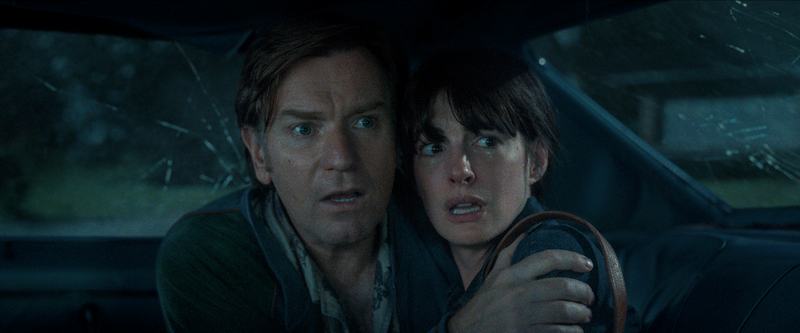
Yi Yi arrives from the turn of the millennium yet feels uncannily attuned to today’s anxieties. The family’s grandmother falls into a coma early on, setting the story in motion and quietly exposing the gaps between duty, intimacy, and understanding. At its core, Edward Yang examines filial piety — a Confucian virtue shaping Chinese culture across generations. Today, amid falling birth rates from China to Singapore and institutions no longer sustaining family continuity, that inheritance feels more fragile than ever.
What makes Yi Yi enduring is Yang’s patient attention to ordinary burdens. Over nearly three hours, he traces family members who share blood and space yet drift along separate emotional currents. Their stories rarely collide dramatically. Instead, Yang observes a slow internal erosion: a family physically together but inwardly dispersed, bound more by obligation than understanding.
The grandmother’s (Ru-Yun Tang) coma cements this condition. Acting on the doctor’s advice, relatives are urged to speak to her daily in the hope that words might bridge the space between presence and absence. Most struggle for words, language failing at the threshold. Only Ting-Ting (Kelly Lee) persists. In this quiet ritual, the film captures a stark truth: reverence without communication, duty without intimacy, love struggling to find a voice.
Midlife Reckoning and Moral Ambiguity
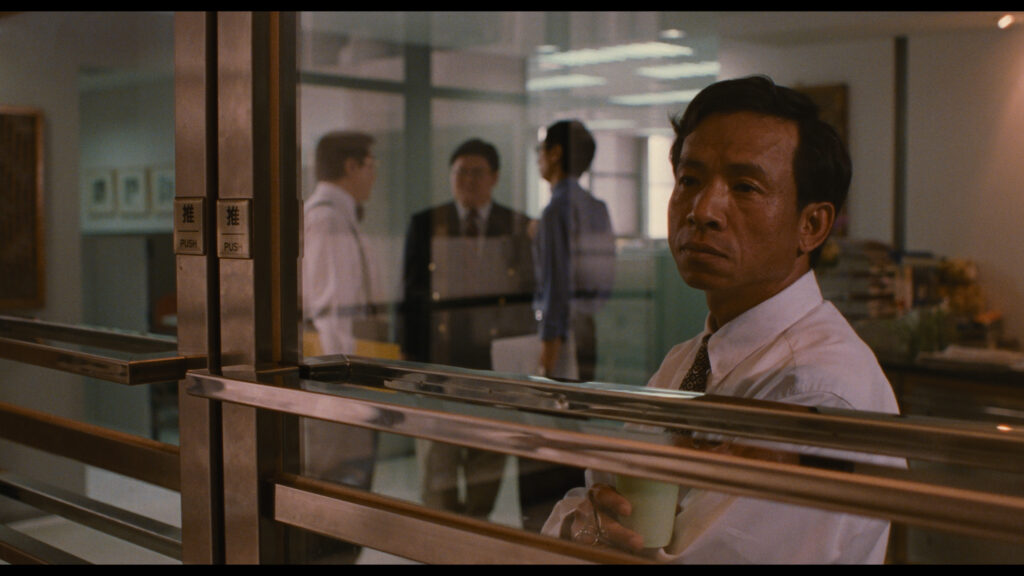
NJ (Wu Nien-jen), the understated patriarch, offers the most revealing perspective. A midlife reconnection prompts reflection on regret and roads not taken. Yang avoids scandal or melodrama; the encounter simply extends NJ’s simmering dissatisfaction. Fidelity and betrayal exist on a spectrum — less a moral failure than a symptom of deeper unrest. Authentic desire sits uneasily within inherited expectations.
Ah-Di’s (Chien-Hsiung Cheng) debt and impulsive romance form a harsher parallel. Both men are measured by provision and composure, yet both appear diminished by the roles they inhabit. They navigate corporate indifference, private disappointment, and societal expectations with little emotional vocabulary. Authority brings neither clarity nor fulfilment; it exposes fragility.
Yang also questions tradition. Overwhelmed by caregiving and domestic strain, Min-Min (Elaine Jin) turns to a religious retreat. Yang frames it not as revelation but as displacement. Spiritual refuge, another system of ritual and routine, cannot fully absorb doubt or sorrow. Meaning, if it exists, must be discovered rather than bestowed.
Seeking Refuge: Faith, Guilt, and Inherited Burdens

Ting-Ting internalises blame for events beyond her control, embodying how children often absorb guilt as proof of devotion. Her persistence at her grandmother’s bedside reflects this inheritance. Through awkward romance, disappointment, and introspection, she begins to separate responsibility from self-punishment. Her arc offers not triumph but recognition — a gradual release of what was never hers alone to carry.
The clearest hope belongs to Yang-Yang (Jonathan Chang), the youngest. Observant and quietly perceptive, he gradually reframes the narrative. While adults search for answers through work, romance, or religion, he intuits something simpler: people are divided less by malice than by limited perspective. We see only what lies before us; we cannot fully access the inner lives of those we love. If understanding is partial, empathy must be deliberate.
Learning to See: Empathy in Yi Yi

This modest insight rescues the film from despair. It exposes emotional failure, moral compromise, and institutional inadequacy without offering grand reconciliation, yet it resists nihilism. Small acts of attention — listening, speaking honestly, acknowledging limits — become a necessary form of grace. In a world where inherited values feel unstable and traditional structures no longer guarantee cohesion, empathy emerges as the most reliable bridge between generations.
For modern audiences, the film endures because its tensions are neither culturally nor temporally confined. Empathy is not a solution but a practice. The emotional legacies we pass on are shaped less by certainty than by attention. In learning to see, and helping others see, we may not resolve life’s contradictions, but we can make them more bearable.