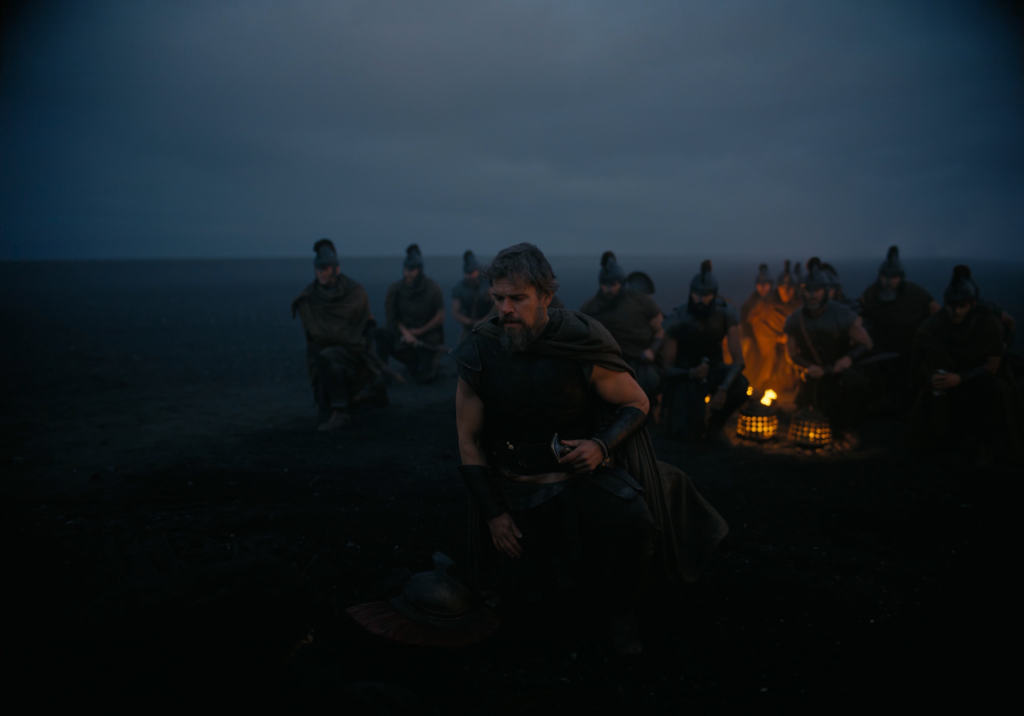
There’s something oddly satisfying about a video game adaptation that is exactly what you expect it to be. Mortal Kombat II understands this better than its 2021 predecessor, and in doing so, it becomes a noticeably stronger, more self-aware entry in the franchise. Rather than forcing cinematic weight onto material that thrives on simplicity and spectacle, the film embraces its arcade roots and lets that identity drive both its structure and its energy.
The narrative is built around a kind of “process of elimination” logic that mirrors its source material. Instead of a tightly wound dramatic arc, the sequel moves through a series of tournaments and confrontations, almost like progressing through stages in a fighting game. This structure gives the pacing a surprisingly breezy quality. Each new location or matchup feels like a level transition, and the film rarely overstays its welcome in any one setting. It’s an approach that keeps momentum high, even when the storytelling itself is fairly straightforward.
What really carries the experience is how much fun the combat is to watch. The characters’ abilities are not just decorative, they actively shape the choreography. Each fight feels distinct because the power sets are so varied, leading to inventive combinations of magic, martial arts, and brute force. The film leans into that diversity, and it works best when it allows those clashes to play out without excessive interruption. When it clicks, it captures the chaotic joy of the games in a way previous adaptations often struggled to achieve.
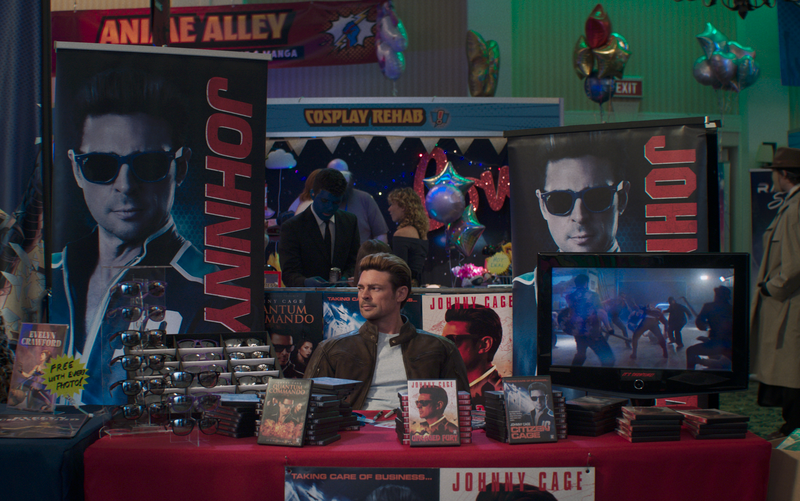
Mortal Kombat II’s standout is Karl Urban’s Johnny Cage, who feels like a perfect tonal fit for this version of the franchise. He brings a self-aware, almost playful energy that cuts through the otherwise straightforward plot. Cage zips through campy one-liners and exaggerated action beats with ease, turning what could have been a purely comic-relief role into one of the film’s central pleasures. His presence reinforces the idea that this world works best when it fully embraces its own absurdity.
Character motivations remain relatively thin, largely revolving around broad stakes like saving or destroying the world. While this lack of depth might feel limiting in a more traditional fantasy film, here it functions more as connective tissue than narrative weight. The story isn’t really trying to be complex—it’s trying to keep the fights moving, and on that level, it succeeds.
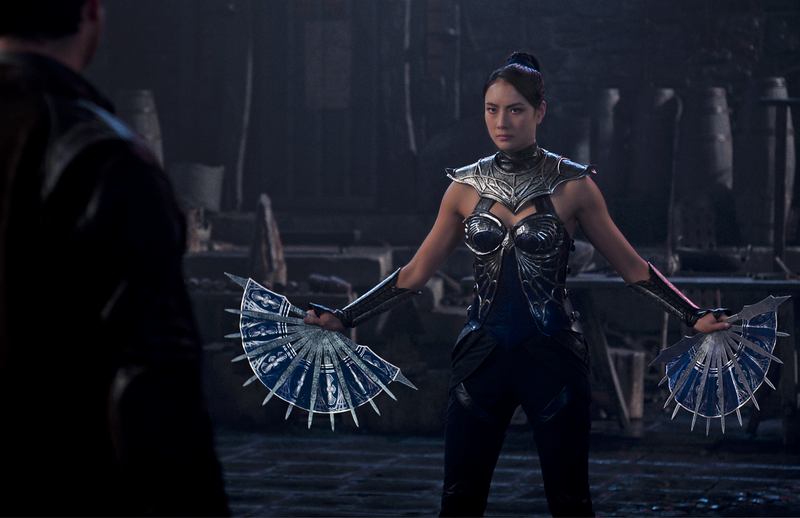
Exposition is heavily front-loaded, with Adeline Rudolph as Kitana carrying much of the early worldbuilding burden. For viewers unfamiliar with the lore, this opening stretch can feel dense and slightly overwhelming. However, as the film progresses, Kitana becomes more central in a way that feels earned, and Rudolph’s performance gains more presence as she shares focus with Johnny Cage, effectively anchoring the film’s midsection and climax.
Visually, the film is somewhat uneven. Some of the green screen work is noticeably heavy, occasionally breaking immersion. However, this also has the unintended effect of making the more grounded, hand-to-hand combat sequences feel even more impactful by comparison. When the film strips back the CGI and focuses on physical choreography, it hits its strongest rhythm.
Ultimately, Mortal Kombat II is not trying to reinvent the wheel — it’s trying to make the wheel spin faster, louder, and with more personality. And in that sense, it succeeds. It’s a clear step up from its predecessor, more confident in its identity and more willing to lean into what makes the franchise work in the first place.