With the surge in media accessibility in the age of streaming, one could argue that mainstream audiences have become increasingly desensitised to on-screen violence and gore compared to those of the past. With horror films arriving by the dozen each year, it is rare for a new entry to feel genuinely repulsive to watch. Enter Lee Cronin’s The Mummy, a film that distinguishes itself by pushing its imagery as far as it can go, steadily escalating the gore until it culminates in an unsettling third act, in the best way possible.
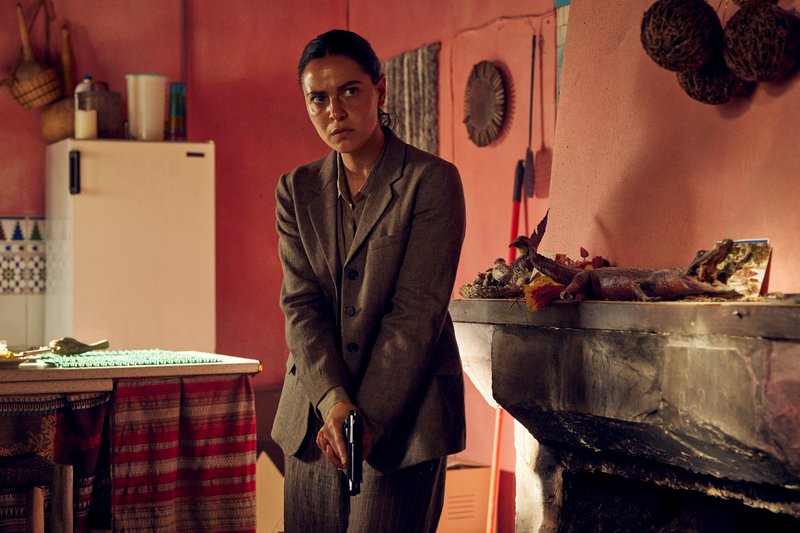
The film feels expansive and, more importantly, authentic in its ambition and sense of scale. Spanning locations across Egypt and the United States, it rarely loses momentum, with the sequences set in Egypt standing out in particular for their commitment to atmosphere and cultural detail. This authenticity is further grounded through May Calamawy’s performance as Detective Dalia Zaki, a supporting character whose Egyptian and Arab identity is meaningfully woven into the narrative. She proves compelling as she wrestles with her moral compass while events grow increasingly distressing.
The rest of the cast is equally strong, with Natalie Grace emerging as the standout in what is by far the film’s most emotionally and physically demanding role. Lee Cronin’s The Mummy also situates its characters in scenarios where the stakes of confronting an entity beyond human understanding feel immediate and real, transforming what could have been a straightforward horror premise into something closer to a character-driven drama beneath its genre exterior.
That sense of authenticity extends to the film’s use of language and mythology. Characters converse in Egyptian where appropriate, adding a layer of immersion often missing in similar productions, while the nods to the mummy’s mythological roots feel earned rather than perfunctory, especially when compared to many recent iterations of the character.
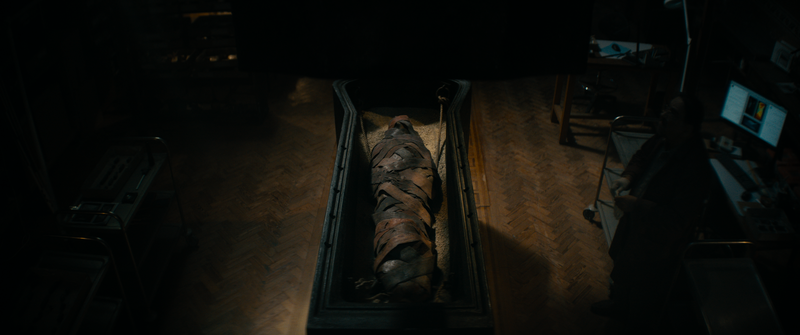
Perhaps most striking is the commitment to gore. Practical effects are used to strong effect, delivering a visceral quality that suits the genre. The makeup and creature design are equally impressive, with Cronin frequently lingering on uncomfortable close-ups that are difficult to shake. In doing so, the film avoids a common pitfall of contemporary monster films, particularly those centred on mummies, by fully committing to the physicality of its creatures rather than softening or obscuring them.
The film is not without its missteps. One notable instance of CGI, particularly involving the coyotes, falls short of the standard set elsewhere. The effects are not entirely convincing and stand out against the otherwise strong practical and digital work.
All in all, Lee Cronin’s The Mummy stands out as a bold and uncompromising entry in a genre often accused of playing it safe. Its commitment to visceral horror, paired with a surprisingly strong emotional core and cultural specificity, allows it to rise above many of its contemporaries. In an era where horror can feel disposable, this is a film that leaves a lasting impression beyond its final moments.