There are now as many live-action Star Wars films released under Disney’s stewardship of Lucasfilm as there were before creator George Lucas handed the keys to the franchise over to the Mouse House. More than a decade later, Disney has long since recouped its investment. Yet after the underwhelming box office performance of Solo: A Star Wars Story and the divisive response to Star Wars: The Rise of Skywalker, Lucasfilm has become noticeably more restrained in its theatrical output, especially compared to other Disney-owned studios like Marvel Studios and Pixar. Arriving nearly seven years after the last Star Wars feature film, The Mandalorian & Grogu is positioned as a cinematic revival of sorts — one that may not only shape the next era of Star Wars, but also test mainstream audiences’ appetite for more stories from a galaxy far, far away.
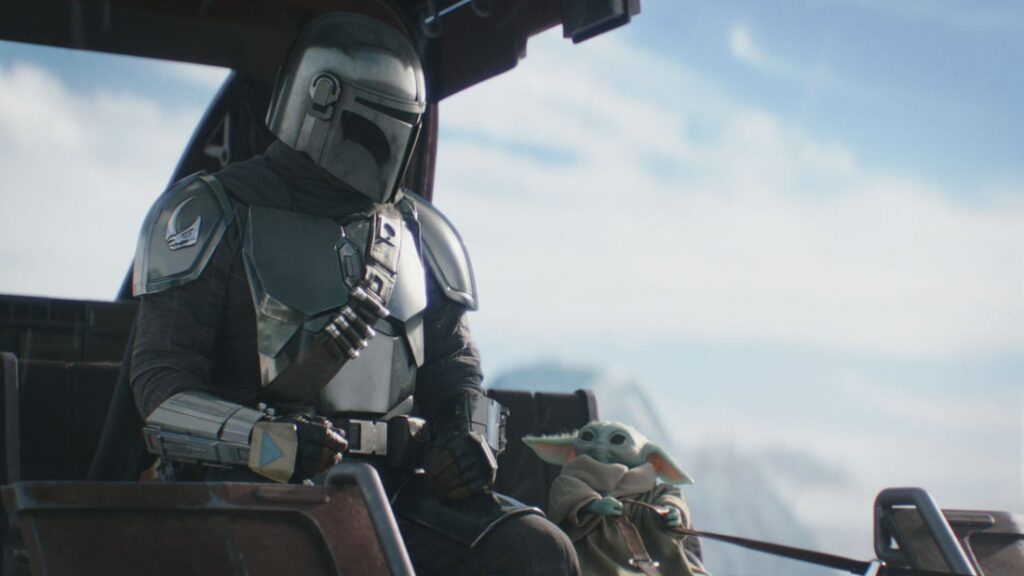
It’s hardly surprising that Lucasfilm would turn to The Mandalorian for its return to the big screen. When it debuted on Disney+ in 2019, the series became a watershed success, at times eclipsing the studio’s theatrical output in cultural relevance. Hoping to recapture that momentum, the film reunites the core creative team, with director Jon Favreau, co-writer Dave Filoni, and composer Ludwig Göransson returning for the next chapter in Din Djarin’s (Pedro Pascal) and Grogu’s story.
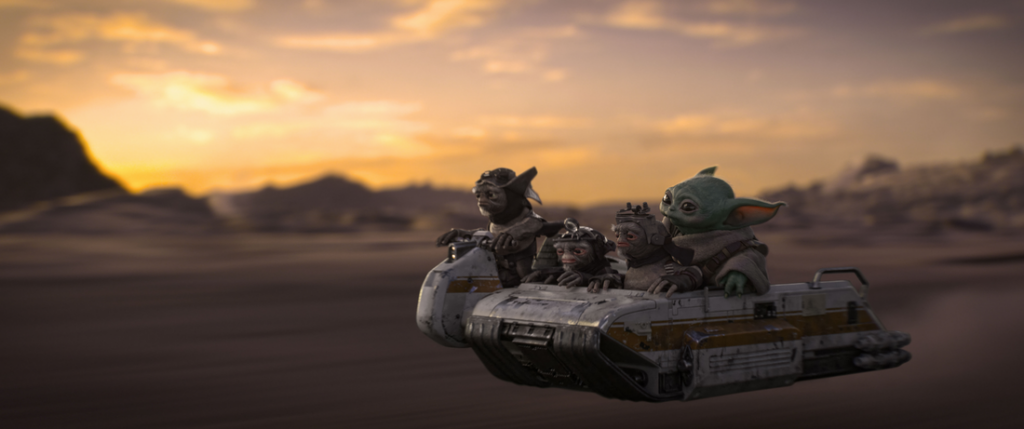
Among its strongest assets is Göransson’s score, which once again stands apart from anything previously heard in Star Wars. Rather than relying entirely on motifs from the series, Göransson expands the sonic palette with confidence, delivering something that feels both recognisably Star Wars and distinctly new. His use of synthesizers is especially striking, giving The Mandalorian a sound that pushes against the franchise’s traditional orchestral identity. It creates a subtle full-circle moment: where George Lucas once leaned on orchestral grandeur to distinguish Star Wars from the synth-heavy sci-fi of its era, this modern iteration embraces electronic textures to carve out a new identity of its own. The result is a score that helps the franchise feel expansive again rather than constrained by legacy.
Where The Mandalorian & Grogu falters is in how closely it repeats the creative limitations of the series’ third season. Despite its cinematic scale, it rarely feels like a meaningful progression for its central characters. Din Djarin and Grogu remain emotionally static, with little development beyond what had already been established years earlier. This stems largely from Lucasfilm effectively walking back the emotional resolution of the show’s second season, resetting their dynamic into familiar territory. As a result, the film carries surprisingly low personal stakes for a Star Wars story, where character growth has historically been essential.
That lack of evolution might have been easier to forgive if the film exercised similar restraint with its runtime. At 132 minutes, it often feels longer than it is, due to sluggish pacing as well as questionable structure. Instead of deepening emotional tension, the film leans heavily on rapid-fire set pieces and a procession of secondary characters tied to broader franchise continuity. The result is a story that can feel more like a tour of Star Wars lore than a focused narrative.
The central narrative thread involving Rota the Hutt further complicates matters. While the character is written with more clarity and purpose than the leads, the vocal performance by Jeremy Allen White lacks the presence needed to fully anchor the film emotionally, leaving its intended dramatic spine somewhat underpowered.
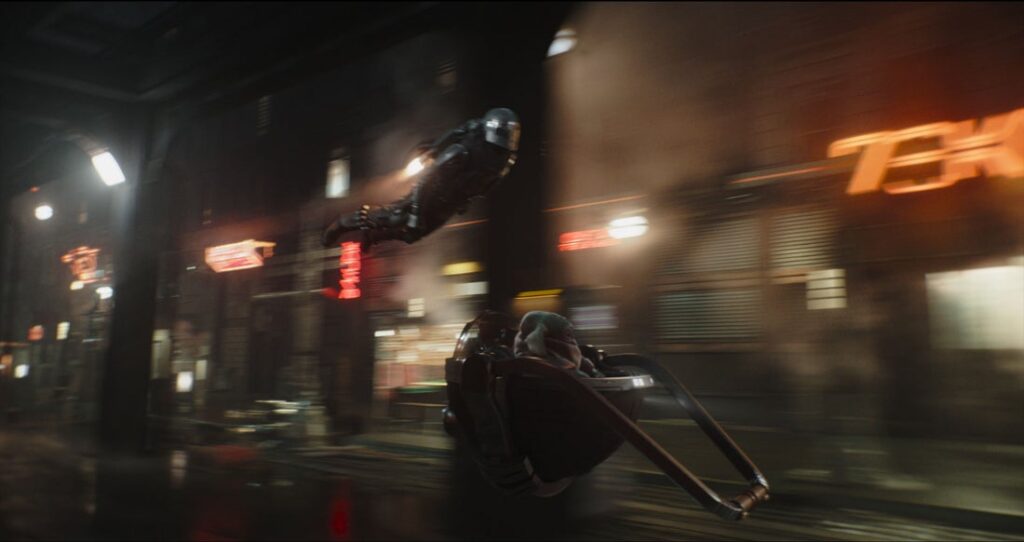
Ironically, the film is at its best when it steps away from spectacle and allows its central duo to simply exist together. A forest sequence, in which one is placed in danger while the other must rely on instinct and resourcefulness to protect them, briefly recaptures the emotional clarity that defined their early appeal. In these moments, the film remembers what made the pairing resonate in 2019 — not mythology or scale, but the bond between them.
It’s one of the rare moments where the film fully understands the appeal of the duo, not as icons designed to carry the weight of an expanding cinematic universe, but as two figures who found unexpected companionship in one another. For all of the film’s visual scale and franchise ambition, it’s this smaller, deeply human dynamic that remains its most compelling strength. Unfortunately, The Mandalorian & Grogu only taps into that magic sporadically, leaving behind a film that is entertaining in bursts, but rarely as emotionally resonant or dramatically essential as it seems determined to be.