What more can be said about the original Star Wars that hasn’t already been said? A culturally revolutionary milestone in filmmaking, George Lucas’ 1977 space fantasy has become arguably the most celebrated film franchise of all time. Spanning nearly five decades, Star Wars is now almost synonymous with modern blockbuster cinema, having pioneered many of the conventions we associate with it today. If there’s one element across the films that commands universal praise, it’s the brilliance of composer John Williams, whose orchestral score far exceeded expectations at a time when synthesised sounds were often linked to the genre. This time, the Malaysian Philharmonic Orchestra (MPO) pays tribute to one of the greatest composers of all time, bringing the score of Star Wars: Episode IV – A New Hope to life for a live audience over two nights.
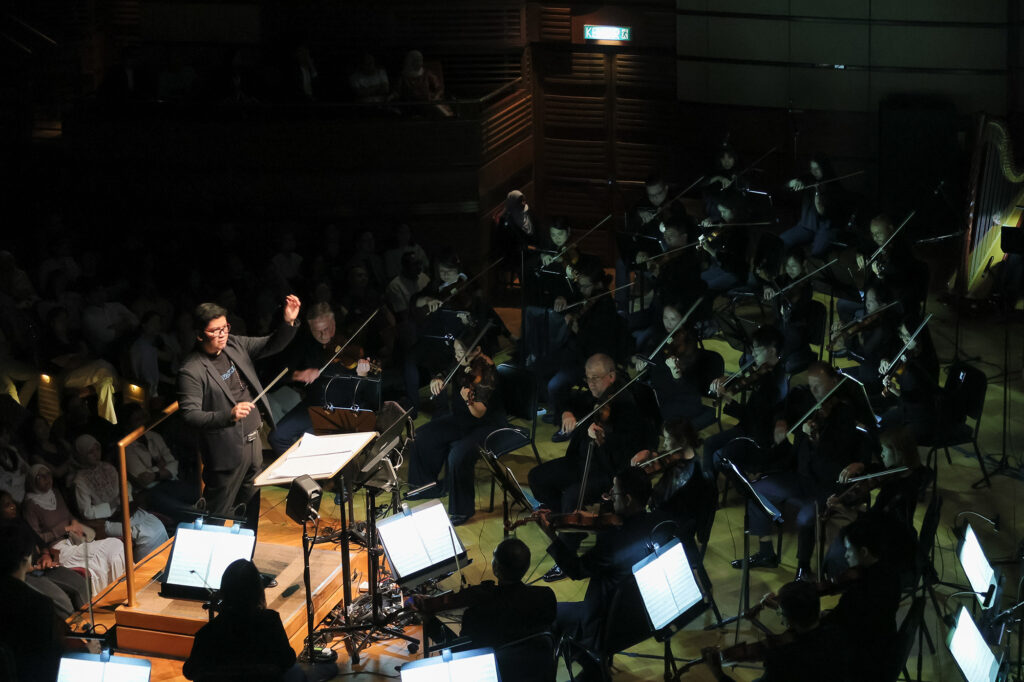
The excitement and enthusiasm were palpable even before the concert began. Fans arrived dressed to the nines, some in subtle nods to Star Wars iconography, others in full head-to-toe costumes, all of which heightened the sense of anticipation. As we entered the auditorium, we were greeted by the sight of a full orchestra making final adjustments, fine-tuning their instruments for what promised to be a demanding evening. The audience quickly took their seats as the clock inched towards 8pm, and composer Gerald Salonga stepped onto the stage to warm applause. He greeted the audience, clearly sharing in their excitement, and remarked on the long-awaited opportunity to finally perform Star Wars live.
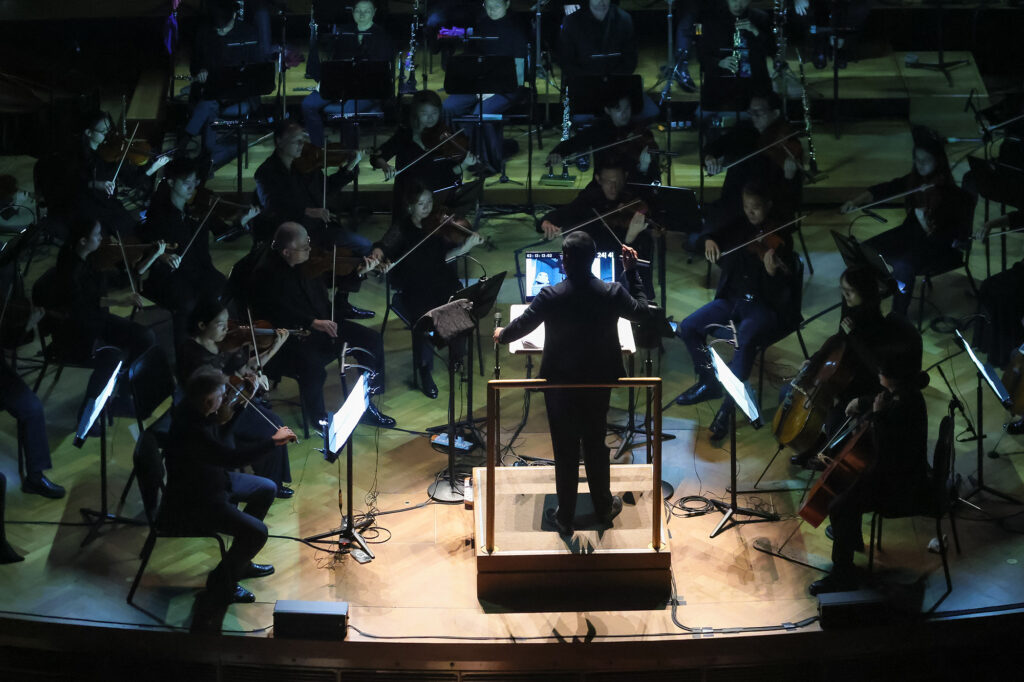
As the lights dimmed, applause rippled through the hall at the first notes of the 20th Century Fox fanfare, quickly swelling into a thunderous ovation as the screen transitioned into the iconic “Main Titles.” It was almost impossible not to hum along as the full force of John Williams’ score surged through the hall, the orchestra moving in tight unison and immediately setting a commanding tone for the evening. Within minutes, it became clear that this would be a markedly different experience, even for seasoned fans. With the film approaching its 50th anniversary next year, many in the audience have only encountered Star Wars through reruns, home media, or streaming. Here, the MPO offered something far more immersive: a richly dimensional soundscape paired with the scale of the big screen and the shared energy of a live audience.
Among the night’s standout moments were “Ben’s Death and the TIE Fighter Attack,” “The Last Battle,” and “The Throne Room and End Title.” Unsurprisingly, these pieces demand the full force of the orchestra, and the ensemble rose to the occasion. Horns, brass, and strings moved in powerful cohesion, amplifying the exhilaration of the already thrilling sequences on screen. “Princess Leia’s Theme” proved to be another highlight, offering a striking contrast and showcasing the orchestra’s finesse. Here, the MPO not only demonstrated its command of scale, but also brought out the tenderness and emotional nuance in John Williams’ writing, reminding the audience of the score’s quieter, more intimate beauty.
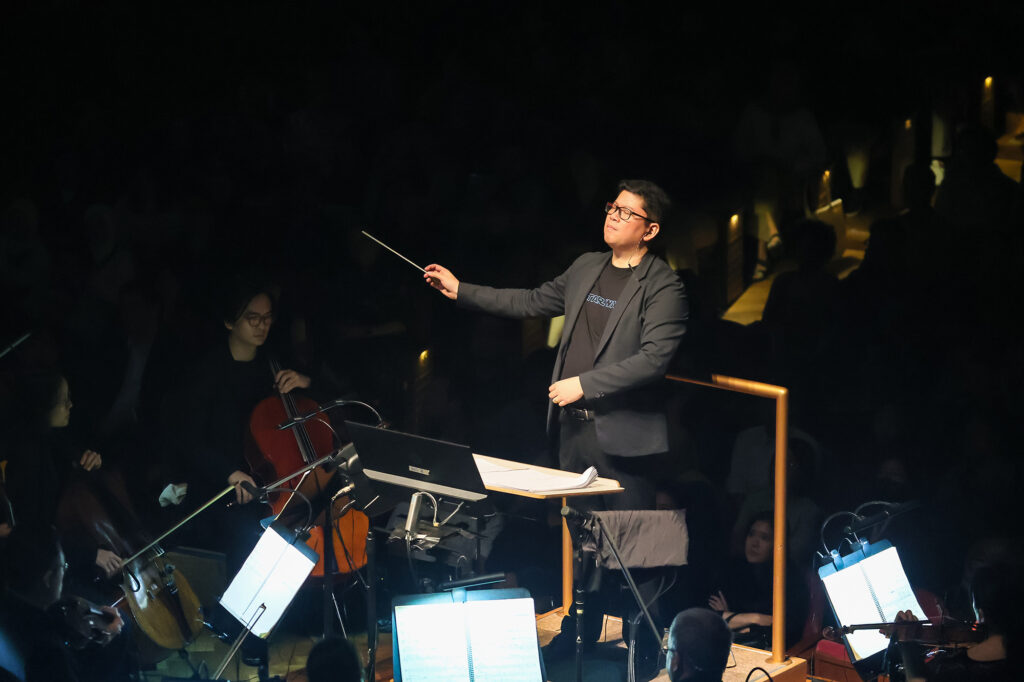
Not everything unfolded flawlessly over the course of the evening. A minor hiccup during the “Binary Sunset” scene briefly disrupted the otherwise seamless synchronisation between screen and orchestra, though it was quickly recovered. More curiously, “Cantina Band” was omitted from the live performance, with the production instead relying on the film’s original track. While the absence of a live rendition may seem like a missed opportunity, it lends the moment an unexpected charm, directing attention back to the on-screen Bith musicians and their diegetic presence within the bustling Mos Eisley cantina.
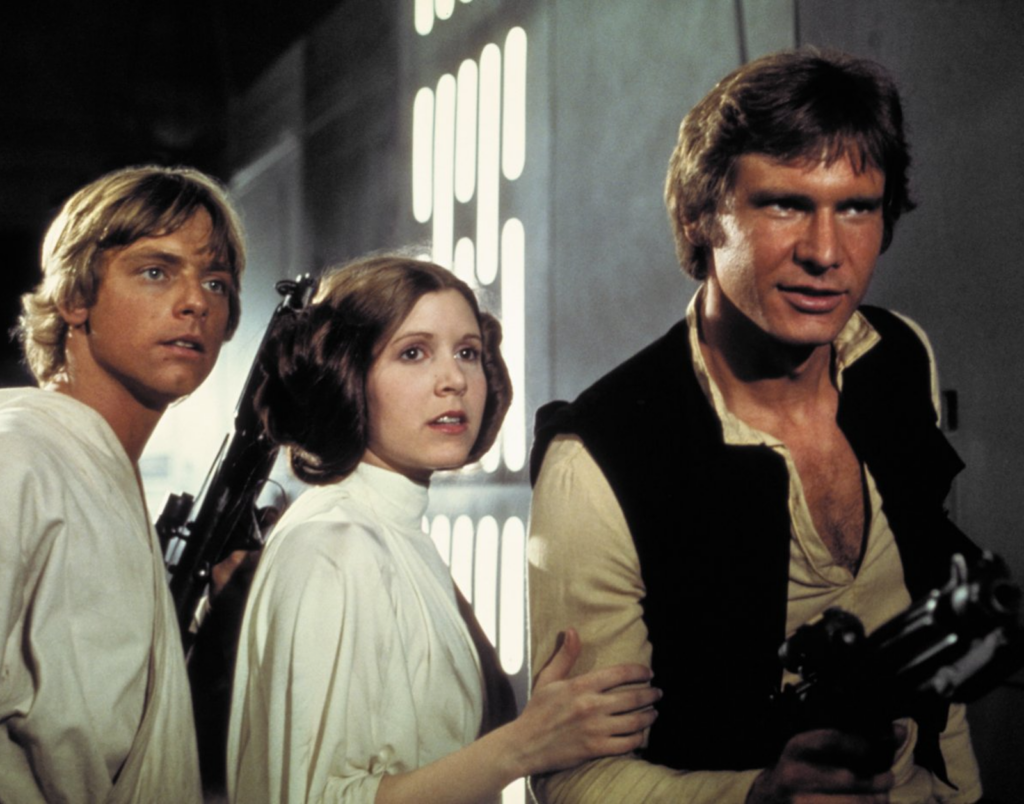
Still, these minor hiccups felt secondary once the concert settled into its rhythm. The audience’s reactions were just as much a part of the experience, adding an infectious energy to the evening. Before the performance, concertgoers were in high spirits, happily taking photos with costumed cosplayers gathered outside the auditorium. Inside, key moments drew immediate and enthusiastic responses — Darth Vader’s (James Earl Jones & David Prowse) imposing introduction earned audible reactions, while the first appearances of Obi-Wan Kenobi (Alec Guinness) and Han Solo (Harrison Ford) were met with warm applause. The interactions between R2-D2 (Kenny Baker) and C-3PO (Anthony Daniels) drew some of the evening’s biggest laughs, underscoring how much of the film’s humour is elevated in a communal setting. By the time the final notes rang out, the hall responded with a well-deserved standing ovation.
In the end, what the MPO achieves is more than a simple screening with live accompaniment — it’s a reminder of why Star Wars endures as a cultural touchstone. Decades on, the film still captivates, but here it’s elevated by the immediacy and scale of a live orchestral performance. John Williams’ score, so often celebrated, reveals new depth and dimension in this setting, reaffirming its central role in shaping the emotional core of the saga. Minor hiccups aside, the concert stands as both a tribute and a celebration — of the music, the film, and the communal joy of experiencing it together. One can only hope this performance marks the beginning of a lasting tradition, with future instalments of the saga brought to life in similar fashion — perhaps next with The Empire Strikes Back, where the full orchestral force of “The Imperial March” would undoubtedly command the hall with equal, if not greater, impact.