Michael Jackson is a name that needs no introduction. From his meteoric rise as a defining force in pop culture to a personal life relentlessly scrutinised and often sensationalised by the media, the King of Pop’s legacy continues to invite intense debate more than a decade after his untimely death in 2009. In the wake of continued posthumous success, and renewed scrutiny sparked by recent documentaries, Michael arrives as both an origin story and an effort by his estate to reframe the narrative, offering answers to questions that extend beyond his most devoted fans.
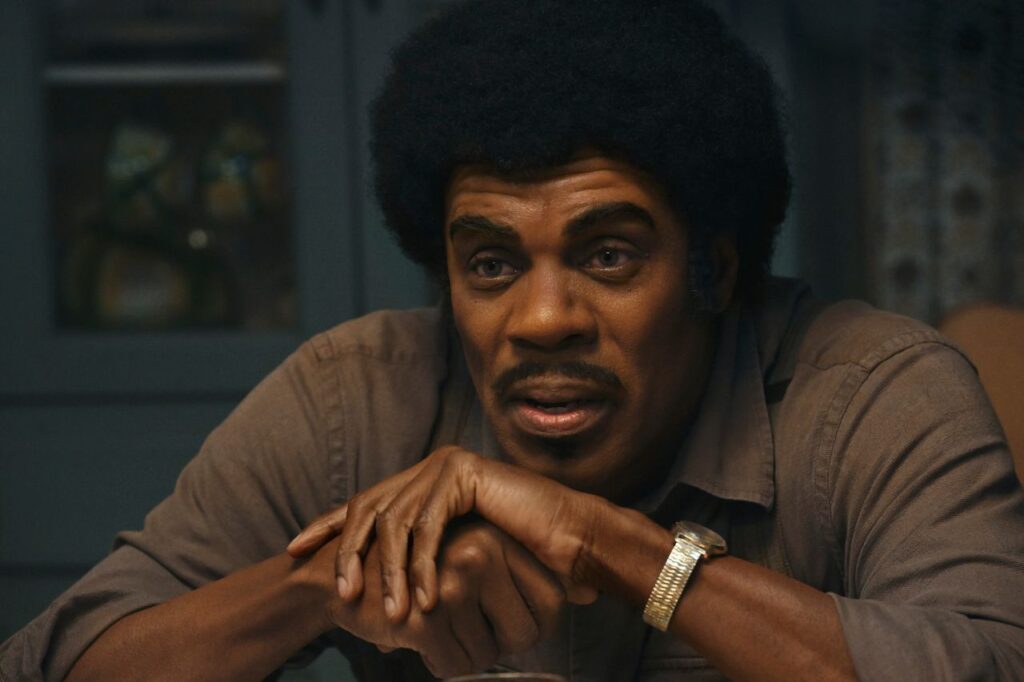
The biopic excels in unpacking the many “whys” behind Michael Jackson, refusing to shy away from the more uncomfortable truths of his upbringing. Despite being a family-sanctioned project, Michael resists the urge to overly sanitise its subject, allowing the thorns of his early life to surface in ways many of its contemporaries might have avoided. Nowhere is this more evident than in its portrayal of Joseph Jackson, the formidable patriarch of the Jackson family, an undeniable triumph of the film. While positioned as the primary antagonist during this chapter of Michael’s life, Coleman Domingo brings striking nuance to the role, embodying a man driven by an unrelenting need for success. His take on Joseph is not merely domineering, but shaped by ambition and survival, someone who views his family less as kin and more as a commercial enterprise, a means of escape from poverty and hardship. It’s a perspective that casts a long shadow, one that lingers even as Michael ascends to extraordinary wealth and creative heights.
Refreshingly, Michael extends that same commitment to scrutiny to its titular figure. Brought to life through an impressively assured performance by his nephew, Jaafar Jackson, the film foregrounds Michael Jackson’s insecurities about his appearance, identity and place as an artist. Anchored by a strong first act, it establishes a clear emotional framework, allowing us to understand how he sees himself in relation to those around him: his family, his menagerie of pets, and the adoring public. Set against his brilliance as a performer, this contrast proves consistently compelling. Rather than settling for the softened, reverential treatment typical of many biopics, Michael confronts its subject head-on, exploring not just the genius of a once-in-a-generation artist, but also the roots of the eccentricities that continue to define how he is perceived.
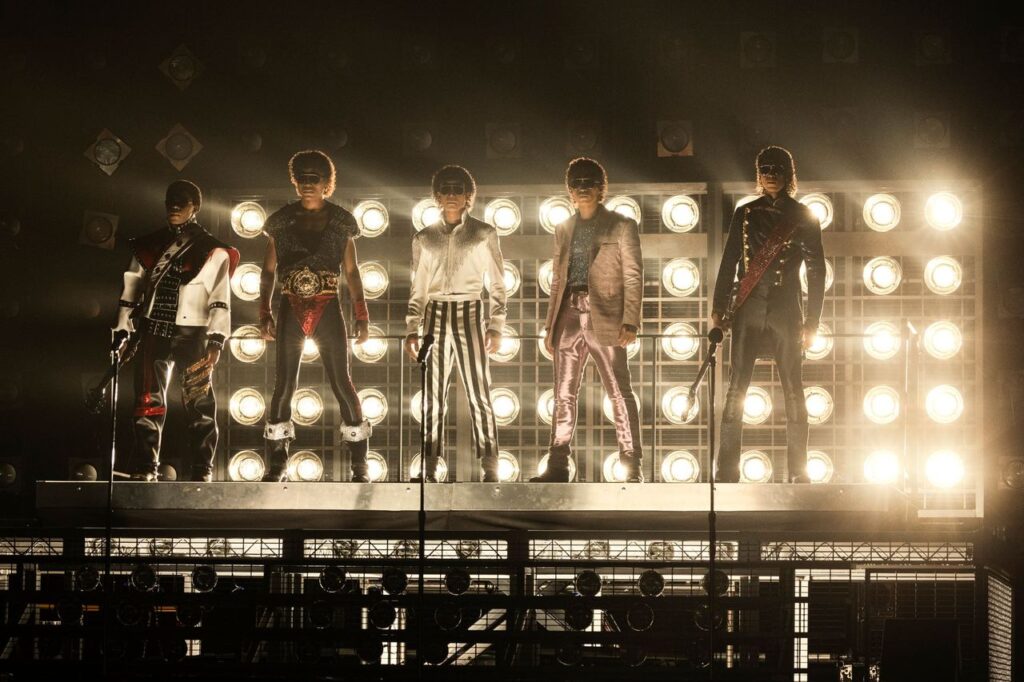
That said, the film’s focus comes at a cost. While Michael, Joseph Jackson, and to a lesser extent Katherine Jackson are given space to develop into nuanced figures, the same cannot be said for the rest of the Jackson family. Given the emphasis on Michael’s formative years, this lack of characterisation feels particularly jarring. It is a curious shortcoming, especially when several of his siblings were involved in the production, and even more so considering the film is dedicated to Tito Jackson. One significant omission is Michael Jackson’s strained relationship with his siblings during the Victory Tour, a period defined by tension and growing distance within the group. Its absence feels like a missed opportunity, one that could have added further emotional depth and sharpened the film’s exploration of ambition and family loyalty. In contrast to the film’s otherwise probing approach, this aspect feels notably restrained, blunting what could have been a more well-rounded portrayal of the Jackson family dynamic.
For most audiences, Michael delivers more than enough to ensure an entertaining experience. Bolstered by one of the most celebrated discographies in music history, including Thriller, the best-selling album of all time, the film’s musical sequences are a sensory triumph. Iconic music videos are recreated with striking fidelity, while live performances are staged with meticulous care, transporting viewers through highlights from both the Jackson 5 era and Michael Jackson’s solo peak. Combined with Jaafar Jackson’s commitment in the lead role, these moments elevate Michael into a thoroughly exhilarating cinematic experience.
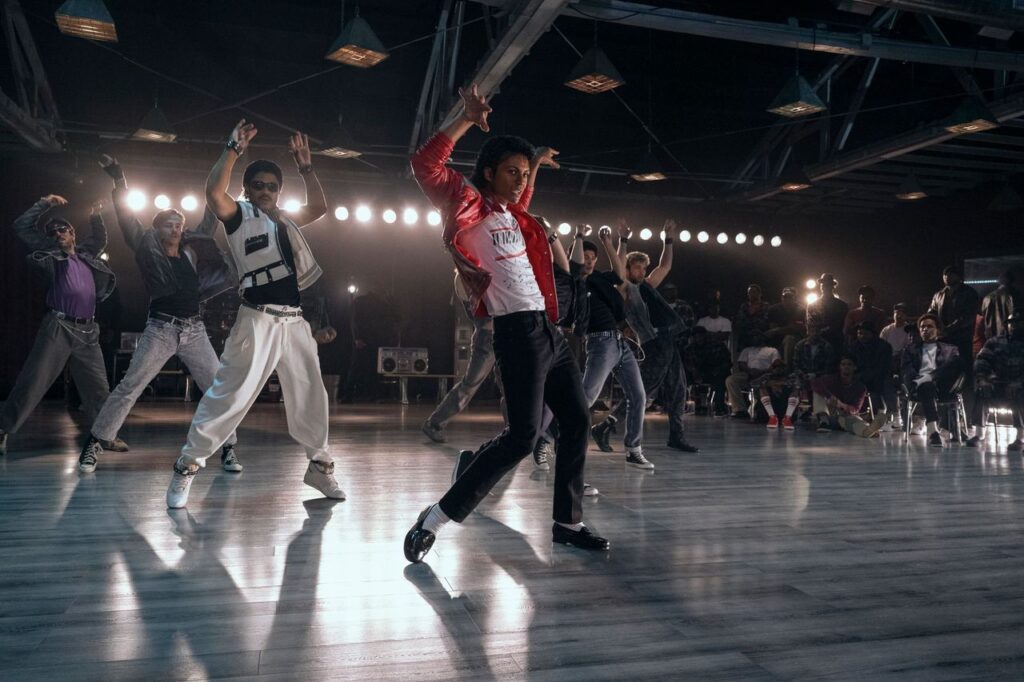
When Michael reportedly encountered potential legal complications over its attempt to address the allegations surrounding Michael Jackson, the decision to rework its third act may ultimately have been a prudent one. In its current form, the film closes on his electrifying performance at Wembley Stadium, sending the King of Pop off at an undeniable high point in his career. As the screen fades to black and the words “His Story Continues” appear, the intent is clear. This is only the beginning. The promise of a continuation points towards the latter half of Jackson’s life, a chapter still defined by enduring controversy. Yet, given the film’s willingness to confront more uncomfortable truths, from his struggles with self-image to his battle with vitiligo, there remains cautious optimism that a sequel might delve deeper, offering a more unflinching look at the man behind the myth, and perhaps a clearer glimpse at the man in the mirror.