Very few gaming icons have achieved the status of Mario. Originally conceived as a side character in the Donkey Kong arcade game, the superhuman plumber has since become one of gaming’s, and by extension Nintendo’s, most recognisable figures. In an era when video games are increasingly receiving the cinematic treatment, it was only a matter of time before Mario had another outing on the big screen. In 2023, The Super Mario Bros. Movie was released to widespread fan adoration, despite a more mixed critical reception. With a global gross exceeding one billion dollars, a sequel was inevitable, leading to The Super Mario Galaxy Movie.
Within the opening minutes of Mario’s (Chris Pratt) latest cinematic adventure, it becomes apparent that the filmmakers are grappling with a fundamental challenge. While the Mario games are often lauded as some of the finest in the medium, their narratives have remained largely consistent across iterations. Historically, the franchise has prioritised gameplay innovation, particularly within the platforming genre, over narrative evolution. As a result, many modern Mario titles continue to adhere to a familiar structure: Princess Peach in peril, and Mario to the rescue.
The first film cleverly subverted this trope by placing Luigi (Charlie Day) in the role of the captive, allowing the story to foreground themes of familial bonds while giving Peach (Anya Taylor-Joy) a more active role. The natural question, then, is where the sequel would take the narrative next.
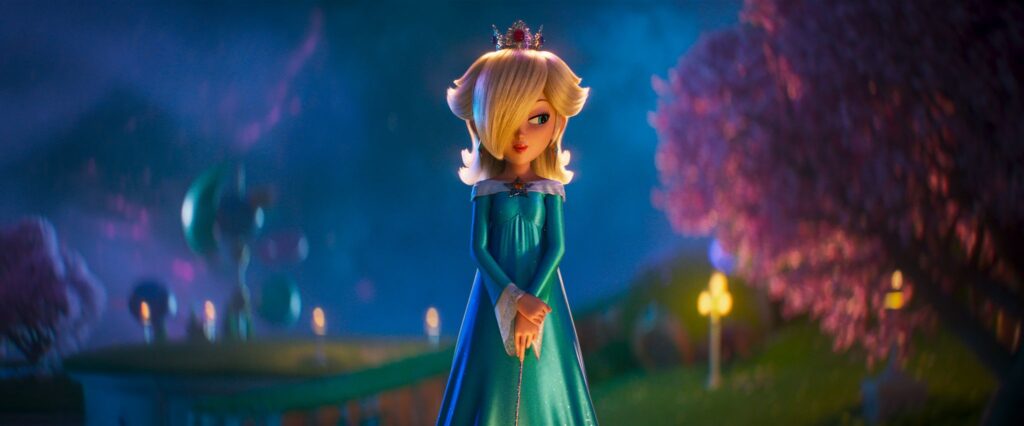
Evidently, the filmmakers have chosen to revert to a more traditional formula. In The Super Mario Galaxy Movie, despite a striking introduction, Rosalina (Brie Larson) ultimately occupies the role of the captive in need of rescue. The result is a film that feels overly familiar, recycling many of the narrative beats established in its predecessor.
That said, even with this sense of déjà vu, The Super Mario Galaxy Movie offers notable improvements in several areas. Illumination’s animation once again proves to be an excellent match for the Mario universe. The film’s action sequences are clear highlights, being fluidly animated, dynamic, and consistently engaging. This visual prowess extends to the film’s sense of scale, which is particularly fitting given its cosmic, planet-hopping premise.
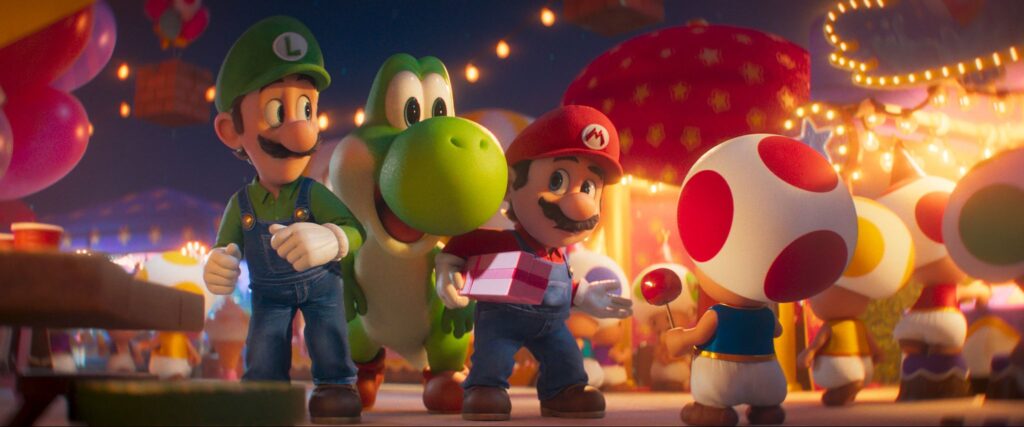
The sequel also expands its scope by introducing elements from the broader creative catalogue of Shigeru Miyamoto. Alongside Yoshi (Donald Glover), the inclusion of Fox McCloud (Glen Powell) is especially noteworthy, hinting at the possibility of a wider interconnected Nintendo cinematic universe, perhaps even paving the way for a future Smash Bros. adaptation. However, these additions come at a cost. The film’s eagerness to reference Mario’s extensive gaming history, combined with an influx of new characters, results in uneven pacing and comparatively weaker writing.
Ultimately, The Super Mario Galaxy Movie is a sequel that dazzles as much as it frustrates. While it builds upon the visual and technical strengths of its predecessor, its reluctance to meaningfully evolve the narrative holds it back from achieving the same sense of novelty. It is an undeniably entertaining spectacle that captures the charm and vibrancy of the Mario universe, but it also serves as a reminder that even the most imaginative worlds require fresh storytelling to truly soar.