When the First Opium War erupted, it marked the beginning of imperial China’s decline as a regional power. Britain’s victory opened the door to further incursions, ushering in what would later be called the Century of Humiliation. Waves of migration, fractured sovereignties, and decades of political upheaval followed. If art often responds to history, it is perhaps unsurprising that much of East Asian cinema wrestles — directly or obliquely — with the aftershocks of these events. Filmmakers across the region have grappled with questions of identity, memory, and the dislocations that accompanied colonialism, war, and rapid modernisation.
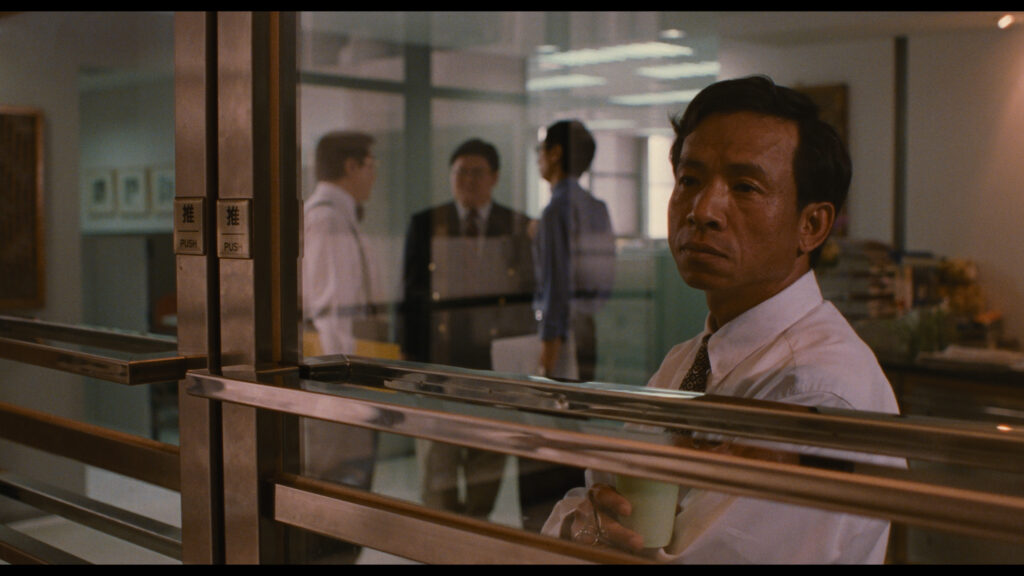
Taiwan, however, occupies a distinct position. Ceded to Japan in 1895, the island absorbed half a century of colonial administration, culture, and infrastructure, producing a modernity markedly different from that of mainland China or Hong Kong. This layered inheritance renders Taiwan both rooted and unsettled. Few filmmakers capture this tension with the precision of Edward Yang in Yi Yi. At first glance, the film is intimate: a middle-class Taipei family navigating work, love, and generational drift. Yet Yang’s domestic canvas contains subtle reflections of Taiwan’s position in the modern world. NJ’s company, struggling with stagnation, turns to Japan for renewal, sending him to Tokyo in hopes of securing a partnership with the soft-spoken game designer, Ota.
Ota functions almost as an olive branch extended to NJ amid the spiritual exhaustion of corporate life. In a workplace defined by quotas and profit, Ota embodies patience, craft, and sincerity — values largely absent in NJ’s professional environment. NJ’s loyalty to him feels instinctive, while his colleagues respond with caution and calculation. In this light, corporate hesitation toward Ota can be read as echoing a society navigating alliances it cannot fully trust. By 2000, Taiwan had begun drifting from the peak of its “Four Asian Tigers” era. Politically, it remained diplomatically isolated, recognised as a sovereign state by only a small minority of UN members. In this light, corporate hesitation toward Ota mirrors a society navigating alliances it cannot fully trust.
East Asian Cinema as Historical Memory
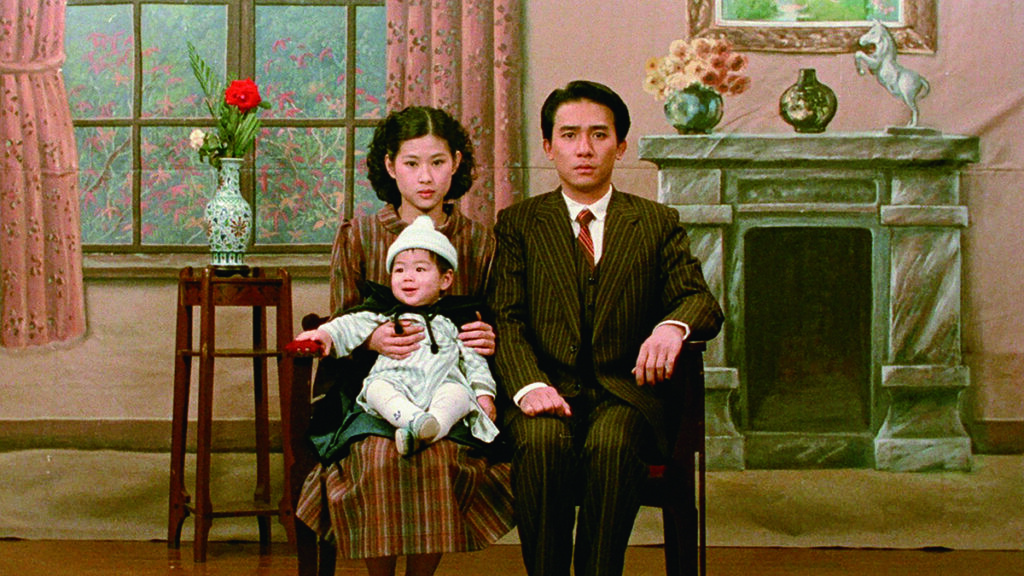
Yang is far from the only East Asian filmmaker to use cinema as a response to historical forces shaping identity. In Taiwan, Hou Hsiao-hsien confronted suppressed memory head-on in A City of Sadness, which examines the aftermath of the Kuomintang’s retreat to Taiwan following defeat by the Chinese Communist Party. For decades, the Kuomintang had mobilised cinema as a vehicle for official narratives; Hou’s film, emerging from the Taiwan New Cinema movement, disrupted that orthodoxy by foregrounding trauma long left unspoken. History, in his hands, is not spectacle but wound.
In Hong Kong, anxieties of identity surfaced differently. Wong Kar-wai’s ‘love trilogy’ — Days of Being Wild, In the Mood for Love, and 2046 — renders longing against the backdrop of a rapidly transforming 1960s Hong Kong. Even his later martial arts epic, The Grandmaster, frames the decline of traditional kung fu schools as both personal tragedy and civilisational shift, tracing the movement of culture southward as political tides reshaped the mainland and, by extension, Hong Kong’s relationship to it.
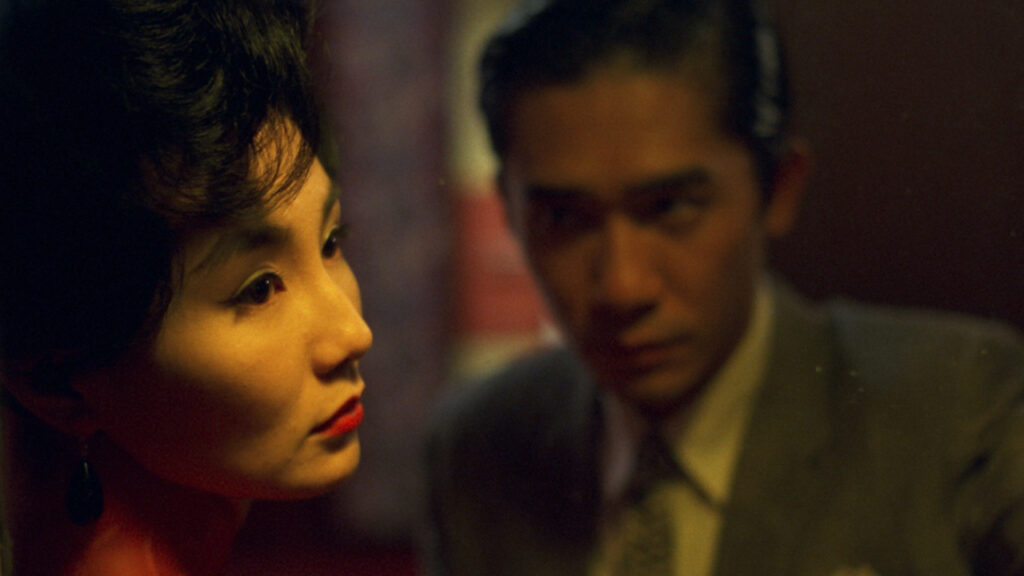
If Wong’s cinema turns inward through romantic yearning, Mabel Cheung looks outward. Her “immigration trilogy” — Illegal Immigrant, An Autumn’s Tale, and Eight Taels of Gold — follows overseas Chinese navigating displacement in New York and beyond, extending the question of cultural identity into the diaspora. Taken together, these filmmakers demonstrate that East Asian cinema has long wrestled with migration, colonial inheritance, and the instability of belonging.
Reflection and Distance: The Visual Language of Yi Yi
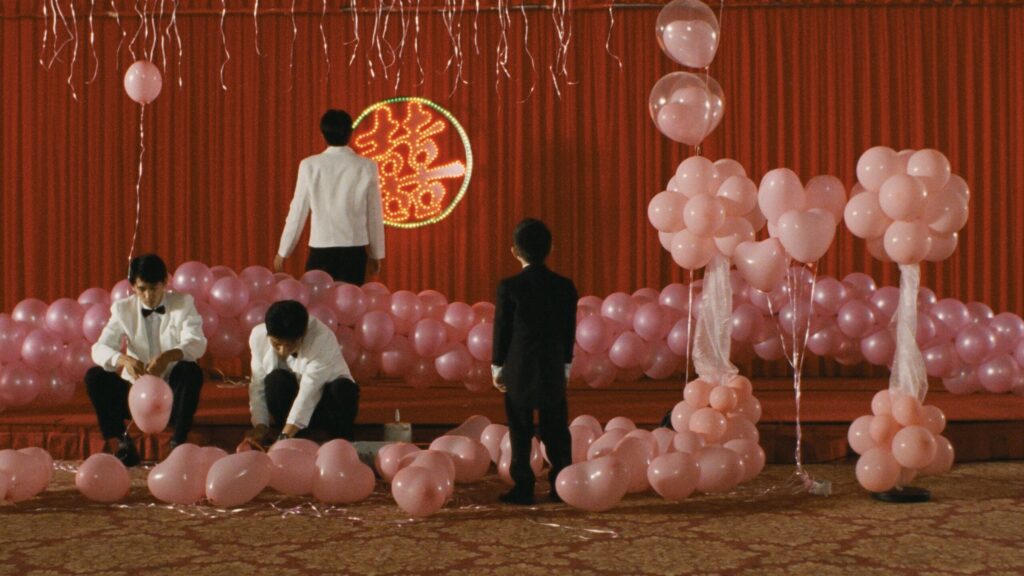
The most striking aspect of Yi Yi is not dramatic revelation but visual restraint. Glass — windows, office partitions, elevator doors — recurs throughout the film, often catching characters in reflection. These layered images quietly externalise interior conflict. NJ, Min-Min, and Sherry are frequently framed through panes that double or fragment them, as if each carries a private narrative running parallel to the one we witness. The effect suggests emotional density rather than opacity; it feels as though entire films exist behind their expressions, withheld but fully formed.
Yang’s narrative structure mirrors this visual strategy. In contrast to much contemporary “slice of life” storytelling, which often builds toward emotional release, Yi Yi resists catharsis. Story threads taper off or conclude without flourish. Revelations arrive softly, sometimes indirectly, and consequences rarely announce themselves. Life, Yang suggests, does not resolve neatly, nor does it arrange meaning around climactic turns. The absence of melodrama becomes its own moral position.
A Cinema of Suspension: Life Beyond Resolution
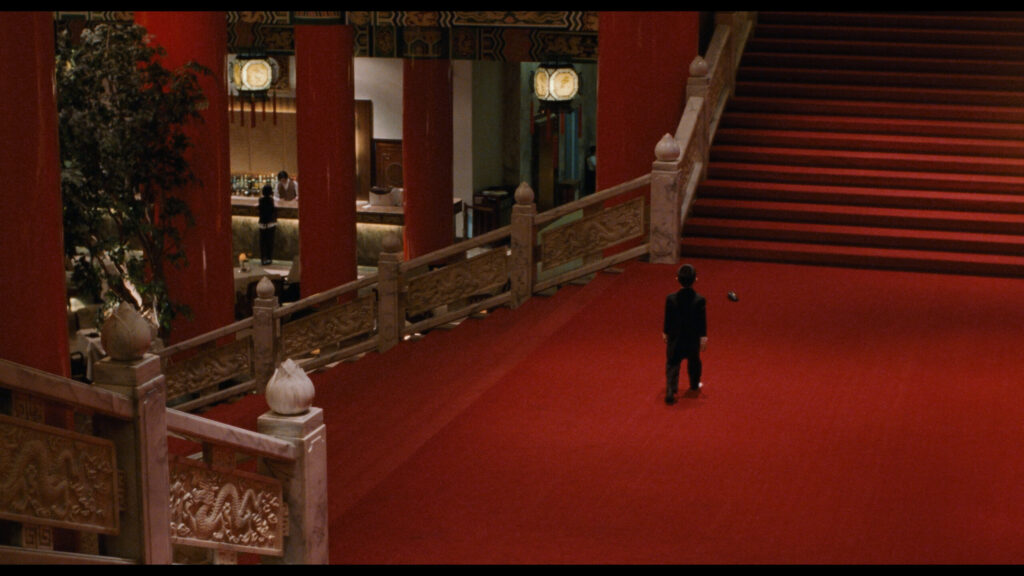
Equally crucial is Yang’s use of distance. Long shots frame conversations that, in another director’s hands, might demand close-ups. Intimate exchanges unfold across rooms, through doorways, or from across city streets. The audience is positioned less as confidant than as observer, peering into spaces that feel inhabited rather than staged. Over the film’s nearly three-hour runtime, the cumulative effect is immersive: what begins as observational gradually becomes absorbing.
In this formal quietness lies the film’s political resonance. The characters occupy rooms divided by glass, cities layered with history, lives shaped by forces too large to name directly. Yang does not dramatise geopolitical tension; he embeds it in architecture, pacing, and silence. If Taiwan’s condition is one of suspended certainty, Yi Yi renders that suspension visible — in reflections, in distance, in stories that continue beyond the frame.