One girl joins the collective, and in a single moment, she loses herself completely. Kusimayu’s (Darinka Arones) individuality is stripped away, flattened into the group. It’s a terrifying vision, and Pluribus uses it to ask a simple question: what do we risk when we give up being ourselves for the betterment of the collective? Everyone moves on, except for the baby goat she presumably raised.

We’ve all been there at some point: isolated, unseen, or misunderstood. Loneliness is now recognised as a growing public health crisis with profound effects on both individuals and society, yet it’s often misdiagnosed as a personal failing rather than a structural consequence of the world we inhabit.
Created by Vince Gilligan, Pluribus is something of an antithesis to the renowned creator’s earlier work. Where Breaking Bad and Better Call Saul relied on external toughness — violence, moral brinkmanship, high-stakes consequence — Pluribus turns inward, trading spectacle for introspection and subverting many of the tropes associated with its genre.
Marking the second collaboration between Gilligan and Rhea Seehorn, the Apple TV original also makes a bold choice in casting Seehorn’s Carol as the inverse of her Better Call Saul role as Kim Wexler. Carol isn’t conventionally likeable, nor is she designed to be charming. She’s abrasive, guarded, and often difficult. Yet the series refuses to reduce her to these traits. It places her in circumstances that make it hard not to root for her, not because she’s admirable, but because she’s profoundly human.

At its core, Pluribus frames survival as a collective act. Humanity, the series suggests, does not endure through individual strength alone, but through connection. This idea is explored through parallel character studies — Carol and Manousos (Carlos Manuel Vesga) — each embodying a different consequence of isolation.
Loneliness in Pluribus operates on two interconnected levels: internal and external. Carol’s isolation is emotional and social. She is surrounded by people yet fundamentally unseen, her interior life marked by the slow erosion that comes from being excluded, misunderstood, or ignored. Her struggle isn’t immediately dangerous, but it’s deeply destabilising. Over time, her isolation corrodes her sense of worth, leaving her unsure not only of how others see her, but of how she sees herself.
Manousos’ isolation, by contrast, is literal and physical. Removed from society altogether, he is forced to navigate the wilds alone, his solitude placing him in immediate and mortal danger. Where Carol’s loneliness threatens her identity, Manousos’ threatens his survival. Together, their arcs form a quiet but forceful thesis: isolation is not merely uncomfortable, it’s unsustainable. Whether emotional or physical, separation from others leaves individuals vulnerable, diminished, and at risk.

If connection is essential for survival, Pluribus is careful to show that performative collectivism is no substitute for genuine human bonds. The dangers of performative collectivism are made painfully clear in one of the show’s most striking sequences. When Kusimayu joins the collective hive mind, she is stripped of any sense of self — the rituals, enforced agreeability, and projected warmth are revealed to be a ruse designed to secure her compliance. The affected abandon their performative acts not because they have changed, but because there is no longer any need for them: her identity has been fully subsumed by the group. This abruption is both literal and symbolic, illustrating why individualism is precious and why it should never be surrendered lightly. It crystallises the central tension of Pluribus: the tension between belonging and selfhood.
This critique extends to the collective’s charm offensive approach in taking over humanity. On the surface, it resembles the logic of social expectations: friendliness as strategy, warmth as persuasion, connection as something engineered. But Pluribus exposes the hollowness of this approach. Manufactured agreeability proves not only insufficient, but actively harmful. Rather than fostering genuine belonging, it demands conformity, flattening individuality in the name of unity. What appears as togetherness becomes another form of isolation, another pressure to perform rather than to be understood.
The relevance of the series lies in how clearly it reflects contemporary life. Loneliness has reached concerning levels, even as tools for “connection” proliferate. The modern world, increasingly lived online, promises constant access to others while quietly eroding the depth of those connections. Social media collapses distance but often replaces intimacy with performance, encouraging visibility over vulnerability.
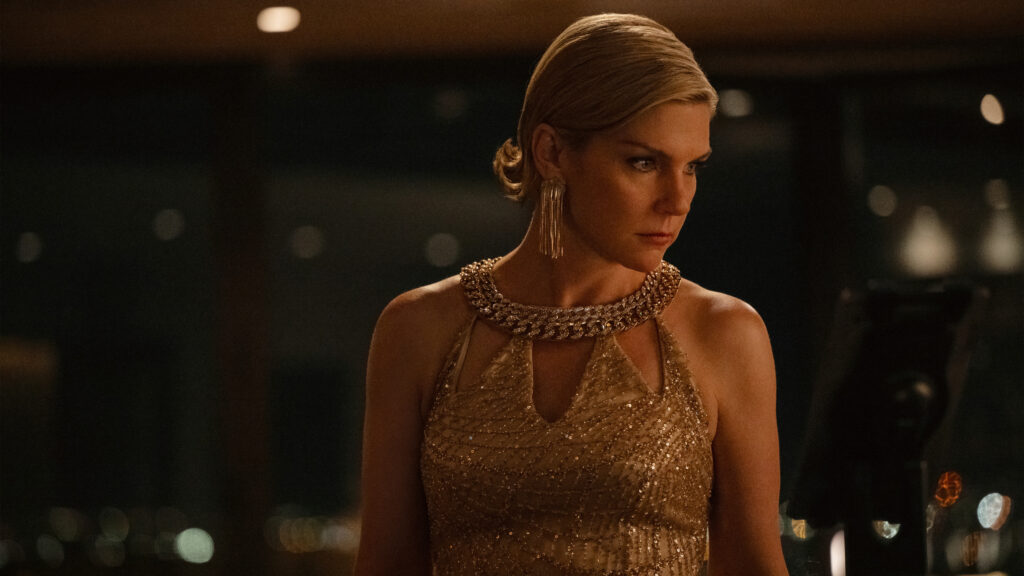
In this landscape, Pluribus offers a radical proposition: a protagonist does not need to be likeable to be worthy of empathy. Carol resists emotional legibility. She’s guarded, abrasive, and often difficult to sit with. Yet the series refuses to punish her for failing to perform social palatability. In doing so, it challenges a cultural logic that equates worth with likeability, a logic reinforced daily by algorithms rewarding charm, agreeability, and emotional correctness.
In its analysis, the series reframes loneliness not as a personal defect, but as a structural consequence of a world obsessed with appearance over authenticity. The series suggests that survival, emotional, social, even physical, cannot be sustained through charm, performance, or likeability alone. Real connection begins with the uncomfortable act of recognition: seeing others as they are, and allowing oneself to be seen in return.
That may be Pluribus’ most unsettling insight. In a culture that teaches us to smooth our edges to earn acceptance, the show insists that humanity is not preserved through perfection, but through presence. We do not survive by being liked. We survive by being known.