This article contains spoilers for The Odyssey.
When the official trailer for The Odyssey reached the internet, different corners of the online community erupted for entirely different reasons. Many celebrated Christopher Nolan’s latest entry in what is already one of contemporary cinema’s most acclaimed directorial filmographies. Others immediately questioned the film’s casting and creative direction, sparking a debate that quickly expanded beyond the merits of the adaptation itself.
Artistic Freedom and Cultural Authenticity

Much of the discourse centred on casting. Critics argued that several creative decisions sat uneasily with the historical and cultural backdrop of Homer’s epic, while supporters countered that adaptation is inherently interpretative and that artistic vision should not be constrained by rigid expectations of historical or textual fidelity. Both positions can be advanced in good faith. The problem was that neither remained confined to the film for long. Instead, The Odyssey became another proxy for broader ideological battles, with commentators on opposing sides treating the film less as a work of cinema than as evidence for narratives they had already embraced.
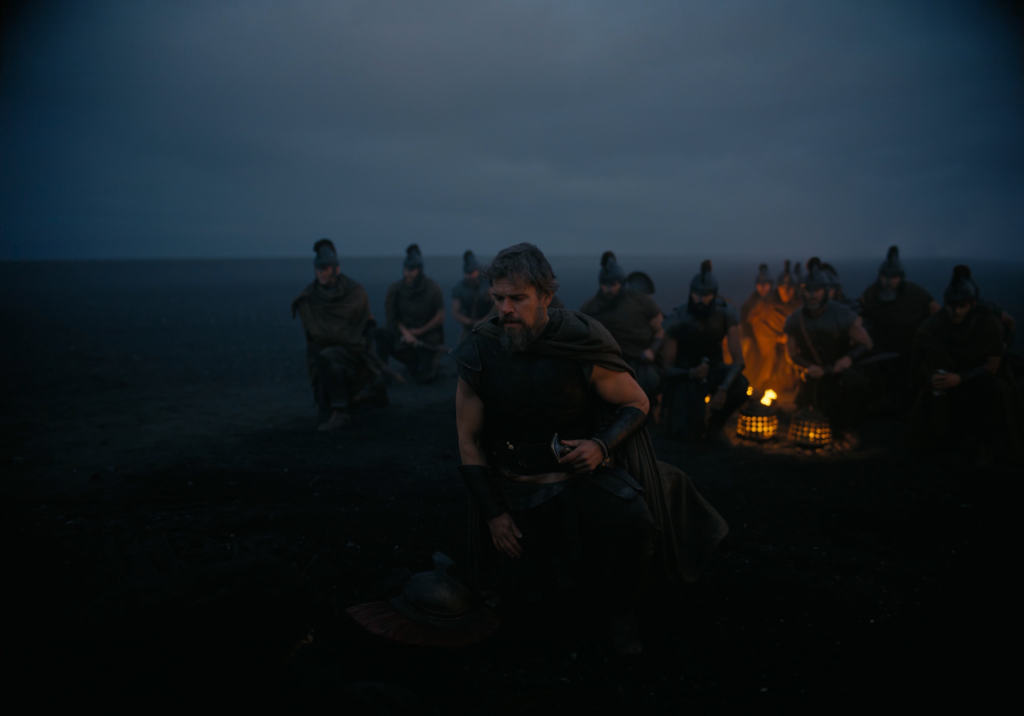
Ironically, Nolan’s film largely refuses to validate the assumptions that shaped much of the pre-release discourse. Elliot Page’s character — whose casting generated considerable speculation before release — is killed within the opening minutes, while Lupita Nyong’o, another subject of online scrutiny, has limited screen time across her dual roles as Helen of Troy and Clytemnestra. Yet Page delivers one of the film’s most compelling scenes, condemning Odysseus’ (Matt Damon) deception in persuading his men to march towards death beneath the guise of a sacred exchange embodied by the Trojan Horse.
None of this places the film beyond criticism. Dismissing every objection as an extension of culture-war politics risks committing the very error that many of the film’s defenders criticise. Questions surrounding cultural representation deserve consideration independent of the motives of those raising them. As Greek City Times has observed, the film’s principal cast appears to include no actors of Greek heritage despite adapting one of the foundational works of Greek literature. To minimise The Odyssey’s significance within Greek cultural identity would be equally disingenuous. It is not merely another ancient story, but a work that has shaped Greek identity and the wider Western literary tradition for centuries.
Nor is this criticism unprecedented. Hollywood has long taken liberties with ethnicity in historical and biblical epics. Alec Guinness’s Prince Faisal in Lawrence of Arabia and Charlton Heston’s portrayals of Moses in The Ten Commandments and Judah Ben-Hur in Ben-Hur remain celebrated performances, yet those casting decisions would likely face similar scrutiny if released today. This does not diminish their artistic achievements; it demonstrates that expectations surrounding representation evolve, and that similar discussions surrounding The Odyssey deserve the same good-faith consideration.
The same principle extends beyond Hollywood. Journey to the West occupies a position within East Asian cultures comparable to The Odyssey in the Western canon. While originating from Chinese literature, its influence has extended across the broader East Asian cultural sphere, particularly in Japan and Korea, where its characters and themes have become deeply embedded in popular culture. The release of Black Myth: Wukong was celebrated in part because it embraced and showcased that heritage. An adaptation of Journey to the West featuring an entirely Caucasian principal cast would likely prompt similar questions regarding cultural representation. Whether one agrees with such a response is secondary to the broader point: concerns about cultural ownership and authenticity are not uniquely Western issues, but arise whenever foundational works are adapted for new audiences.
The Trojan Horse and the Crisis of Good Faith
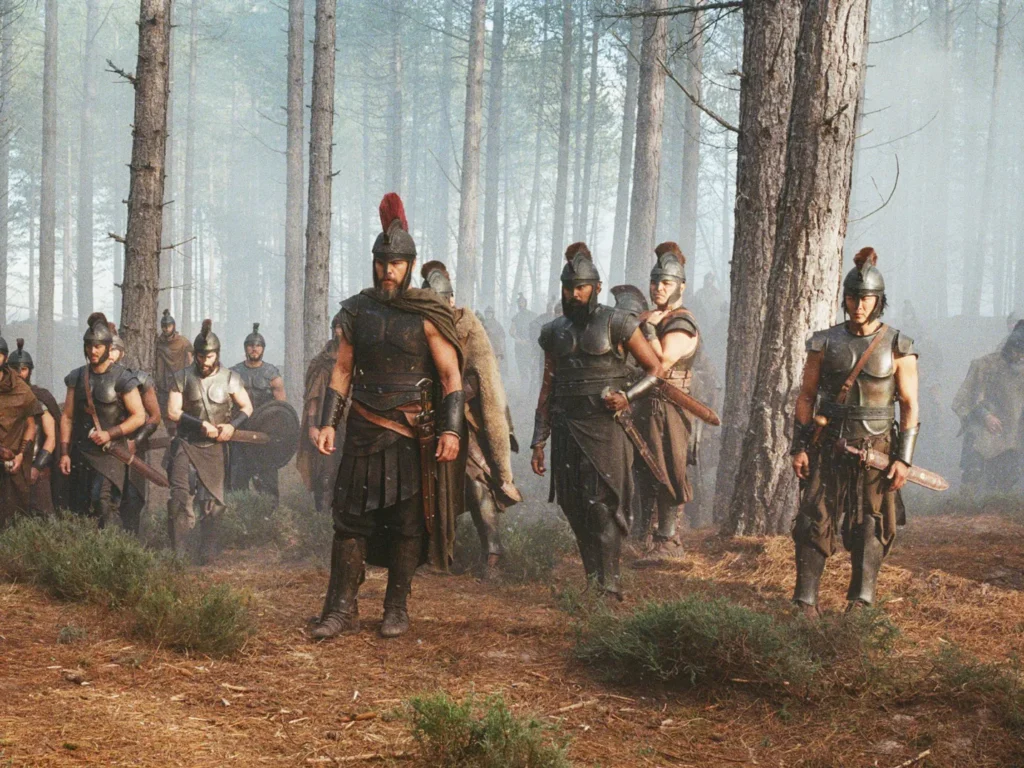
Perhaps the greatest irony is that the discourse surrounding The Odyssey ultimately reflects the lesson at the heart of the film itself. Through its non-linear structure, Nolan places the sacking of Troy at the centre of the film’s climax, transforming the fall of the city from merely the conclusion of a war into a meditation on the collapse of trust, order, and shared values. Set against the backdrop of the Bronze Age’s decline, the film repeatedly returns to a more enduring question: what happens when the sanctity of shared norms is deliberately betrayed?
The Trojan Horse succeeds not simply because it is an ingenious military strategy, but because it exploits the Trojans’ faith in sacred customs, ritual obligations, and divine signs. By disguising an act of war as an offering worthy of reverence, Odysseus weaponises the very conventions that make trust and civilisation possible. Troy is not undone solely by superior strategy; it falls because the assumptions that hold society together are turned against it.
That idea feels remarkably contemporary. The controversy surrounding The Odyssey demonstrates how readily modern discourse can become consumed by suspicion. Increasingly, disagreement is treated not as evidence of differing values or interpretations, but as proof of hidden motives or ideological allegiance. In a period of heightened political polarisation, people are often more willing to retreat into familiar narratives than seriously consider opposing arguments. Disagreement becomes a contest of identity rather than ideas.
Viewed through that lens, the Trojan Horse represents more than deception in war. It illustrates what happens when symbols, institutions, and moral language cease to function as shared points of reference and instead become instruments of strategic advantage. Their power depends upon a collective expectation that they will not be cynically exploited. Once that expectation disappears, society does not merely become more divided; it becomes less capable of sustaining the good-faith disagreement upon which any social contract depends.
When Trust Becomes a Weapon
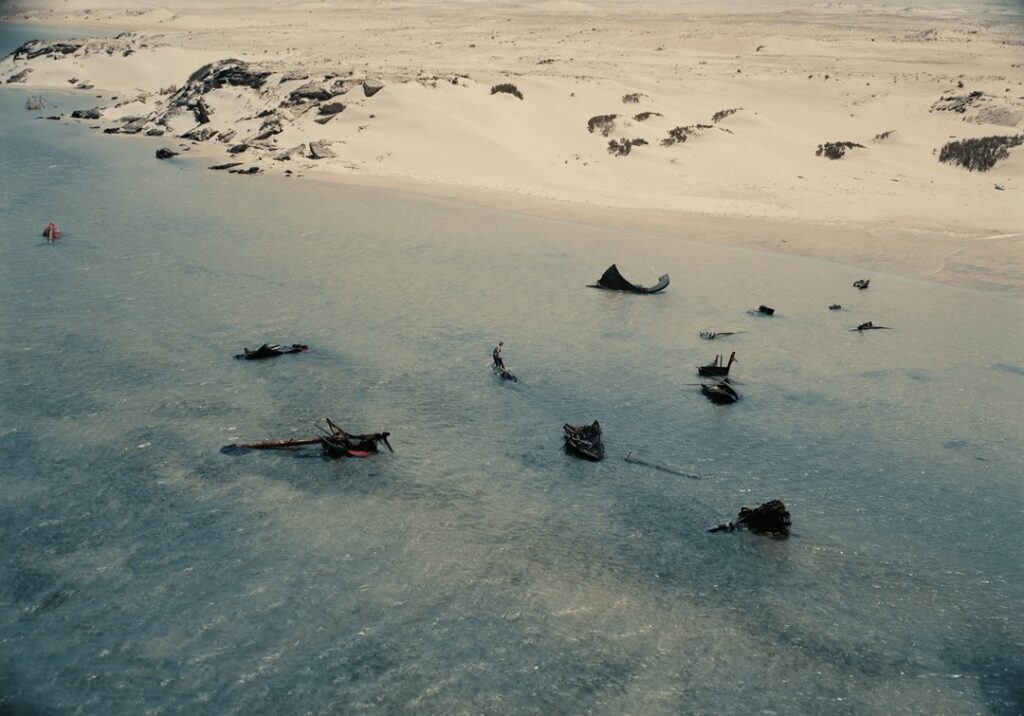
The tragedy of Troy, then, is not only that a city was conquered. It’s that trust itself became a weapon. Thousands of years later, the same question remains: what happens to a society when its members no longer believe that those across from them are speaking sincerely?
Perhaps that’s the enduring lesson of The Odyssey. Odysseus reflects that “a new dawn will break over the darkened world, when our mistakes will once again be forgotten.” At first, the statement appears to promise renewal, a reminder that even after devastation, humanity can begin again. Yet there is something far more unsettling beneath it. The dawn arrives not because humanity has overcome its flaws, but because the memory of those flaws eventually fades. The same forgetting that allows civilisation to rebuild also creates the possibility of repeating the very mistakes that brought it to ruin.
The greatest threat to civilisation is not disagreement itself, but the erosion of the shared trust that makes disagreement possible. A society does not collapse simply because people hold opposing beliefs; it collapses when disagreement becomes inseparable from the assumption of bad faith. When every argument is viewed as a Trojan Horse carrying hidden motives, dialogue becomes impossible and the foundations of social trust begin to fracture.