When Toy Story 4 was released in 2019, many went into theatres skeptical about the prospect of a sequel to a trilogy that had already concluded in spectacular fashion. After all, Toy Story 3 is one of the rare third instalments in a trilogy that manages to sustain the quality of its predecessors while delivering a deeply satisfying conclusion. While Toy Story 4 wasn’t bad by most measures, it didn’t really have much new to say in the grand scheme of things. Fast forward to 2026, and Pixar has decided it’s time for Toy Story 5, delivering yet another entry into the now over two-decade-spanning franchise.
Fortunately, Toy Story 5 has more substance to it, weaving various socially relevant themes into its narrative. In an age where discussions around the loneliness epidemic and concerns about children’s access to digital devices have become increasingly prominent, Pixar’s latest entry is surprisingly adept at building a story that reflects the anxieties of the present day. In the world of Toy Story, human attention can almost be interpreted as having a deified presence; as such, the rapid advancement of technology naturally becomes an existential crisis for the beloved toy characters at the heart of the story.
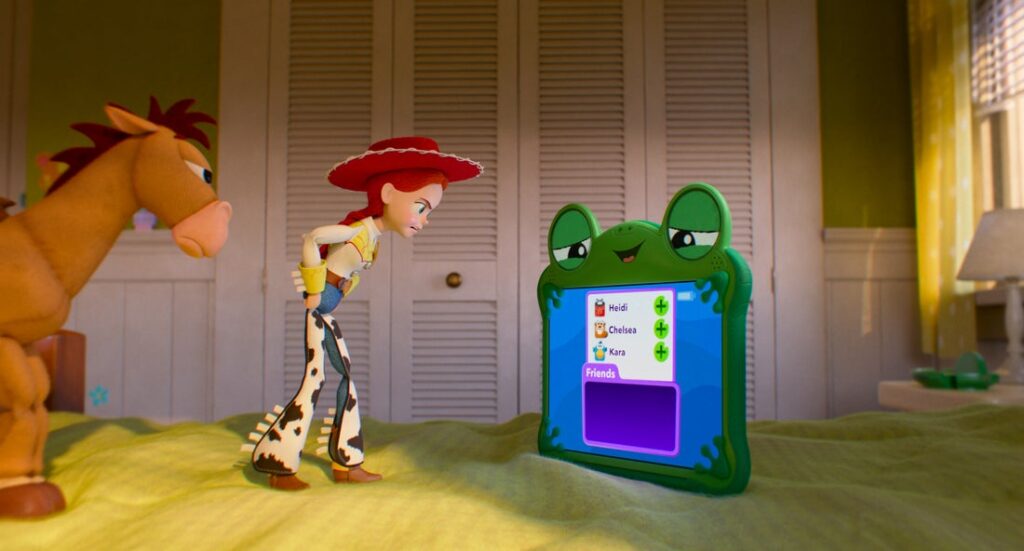
The leap in technology is personified in one of the film’s antagonistic forces (which we will return to later) in Lilypad (Greta Lee), a children-oriented tablet that represents the modern shift in children’s interests. In true Pixar fashion, Lilypad is not an outright villain of the story, as the device also strives to do what it believes is best for its owner, Bonnie (Scarlett Spears). This approach opens the door for Toy Story to revisit and expand on some of the core themes introduced in the very first film. As Bonnie begins to dabble in social media, she finds herself increasingly ostracised from other children for being different. The film highlights how people — particularly children — can sometimes be a more destructive force than any external influence.
The film’s emotional core is further strengthened through its focus on Jessie (Joan Cusack), who is given a meaningful arc that serves as a satisfying full-circle moment for her character. It ultimately becomes the film’s most emotionally resonant storyline, offering a level of closure and depth that stands out even within a franchise known for its heartfelt storytelling.
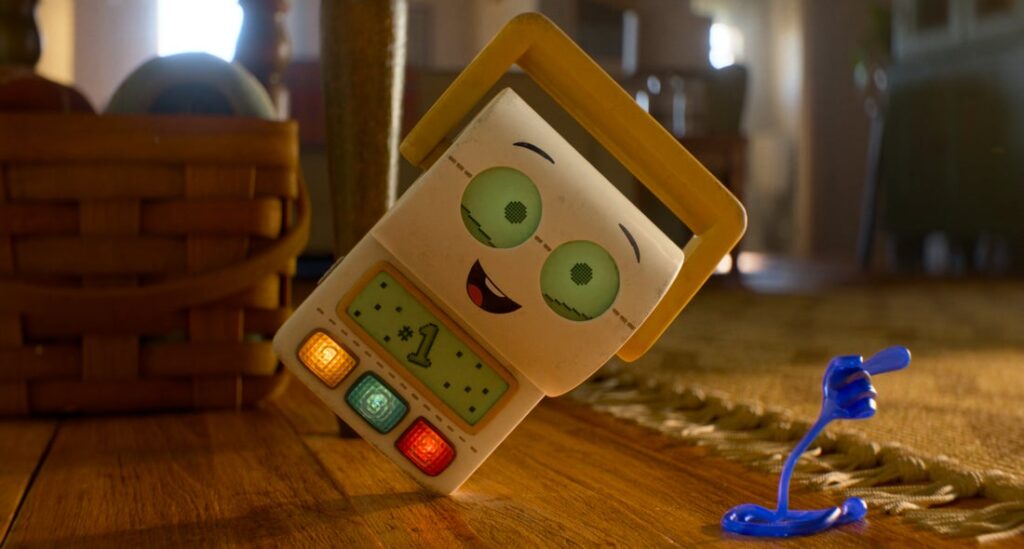
Conan O’Brien’s Smarty Pants is a standout, with the famed comedian fully committing to the role of a potty-training device. While the character is consistently funny, the jokes surrounding him begin to feel repetitive after his first few appearances, as the writers repeatedly rely on the same juvenile humour involving human waste. Meanwhile, the animation is as stunning as ever — no surprises there, as Pixar continues to operate at the highest technical level in the industry.
Taken together, these elements make Toy Story 5 feel like a familiar yet thoughtfully updated continuation of the franchise. While not every comedic beat lands with equal strength, and some ideas are leaned on a little too heavily, the film still succeeds in balancing humour, emotional weight, and thematic relevance in a way that feels true to Pixar’s best work. It stands as a very strong entry in the Toy Story series, even if it ultimately does little to provide a sense of finality to the story. Instead, it feels more like a continuation than a conclusion, revisiting well-worn territory while still finding enough new emotional ground to justify its existence.