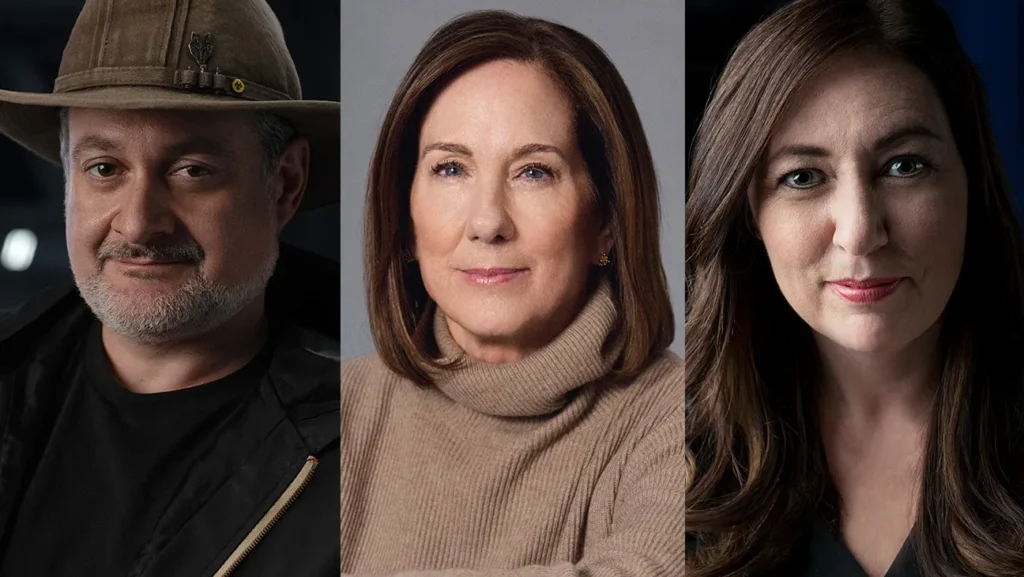
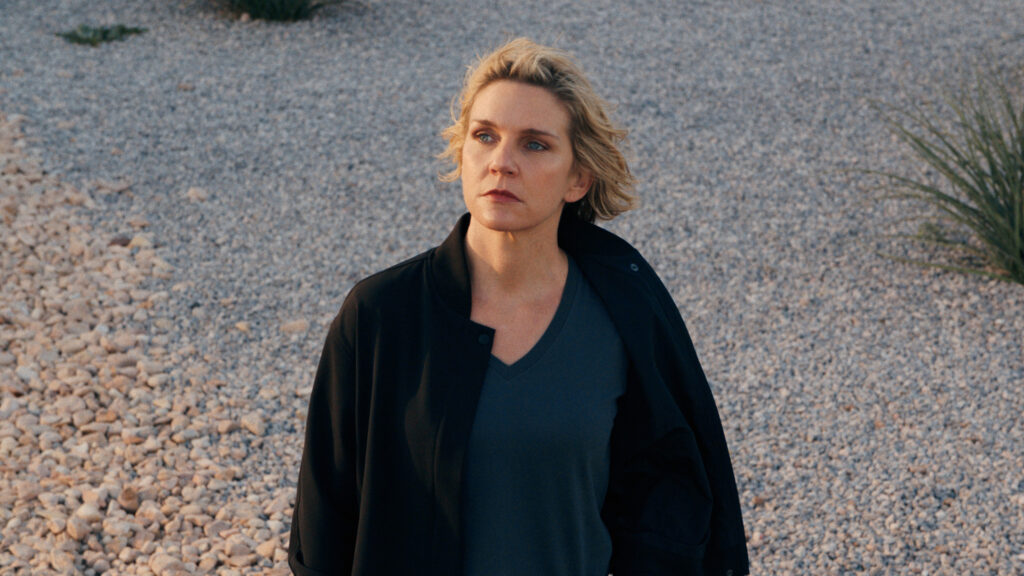
It’s official. After years of rumours and speculation, Lucasfilm has announced that Kathleen Kennedy will be stepping down as president. Her departure brings to a close a tenure of more than a decade, one defined as much by success as by controversy. Since Disney’s acquisition of Lucasfilm in 2012, the company’s output has been inseparable from Kennedy’s leadership. Supporters credit her with revitalising Star Wars for a new generation and restoring it to cultural relevance. Critics, meanwhile, see her as emblematic of its creative drift and internal instability. The question, then, is not simply who’s right, but what her exit actually means for the future of a galaxy far, far away.
A Promising Vision for Star Wars
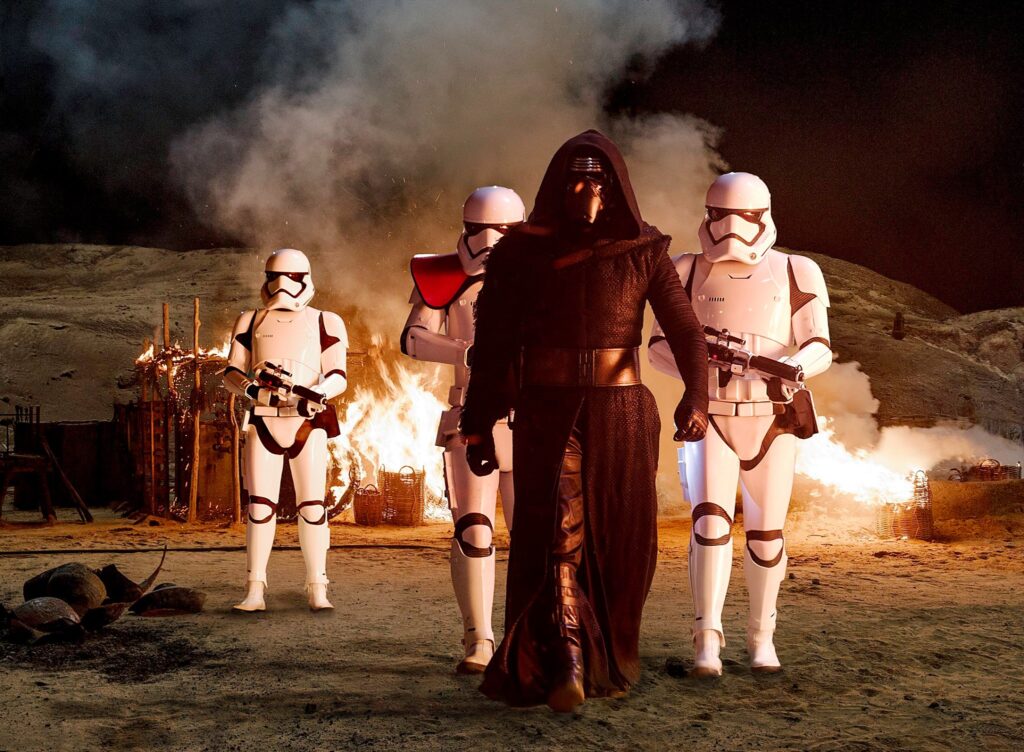
To describe Disney-era Star Wars as having a mixed track record would be an understatement. Yet its opening act set an undeniably high bar. Under Kennedy’s leadership, The Force Awakens arrived to overwhelming commercial success and broadly positive critical reception. It reassured audiences, soothed investor anxiety, and, crucially for Disney, appeared to justify the $4 billion price tag attached to Lucasfilm. That momentum carried into Rogue One, which also crossed the billion-dollar mark and earned praise for expanding the universe while respecting its roots. The film was widely lauded for appealing to newcomers without alienating long-time fans. Together, these early successes established Kennedy as a steady and credible steward of one of the most valuable intellectual properties in entertainment.
Kennedy initially championed filmmakers with strong individual voices rather than enforcing a rigid, serialised house style. This approach was not dissimilar to Marvel Studios, which balanced franchise oversight with directorial freedom to great effect. The initial roster reflected this philosophy. J.J. Abrams, Rian Johnson, Phil Lord and Christopher Miller, and Josh Trank were selected to bring their distinct sensibilities to different corners of the Star Wars universe. This was a sharp departure from the pre-Disney era, when the franchise was largely guided by a single creative force. George Lucas directed four of the original six films, and even Return of the Jedi, credited to Richard Marquand, was heavily overseen by Lucas. The Disney era promised diversity, experimentation, and creative breadth.
Structural Missteps and the Sequel Trilogy
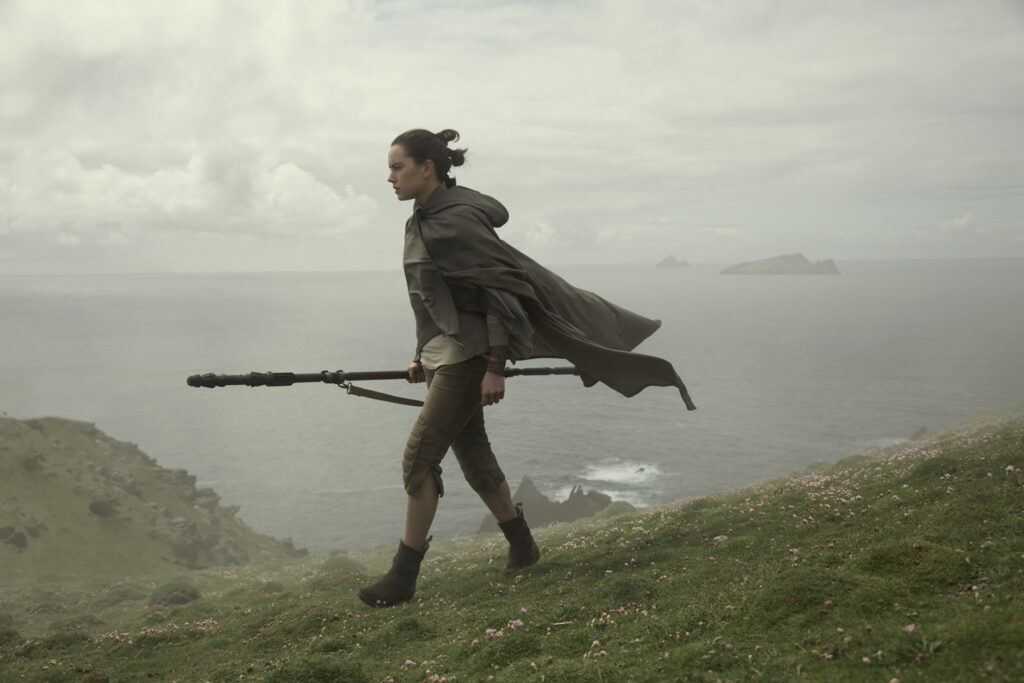
In practice, however, this filmmaker-first philosophy proved well-intentioned but structurally unsound. Nowhere was this more apparent than with The Last Jedi, a film that came to define the fault lines of the modern Star Wars era. Rian Johnson was granted creative freedom unprecedented in contemporary franchise history, arguably unmatched by anyone not named George Lucas. The result was bold, challenging, and willing to challenge long-held assumptions about heroes and legacy. It was also deeply polarising. Fan enthusiasm fractured, online debate grew toxic, and the franchise became destabilised. The core problem was not that The Last Jedi derailed a trilogy plan, but that no coherent plan existed. Any plan that had existed was abandoned in favour of an accelerated production schedule imposed from above.
This structural weakness can be traced to Disney’s earliest days with Star Wars. Michael Arndt was initially hired to develop an overarching story for the new post–Return of the Jedi trilogy. The intention was clear: a cohesive, long-term narrative. Yet Arndt was never given the time such an undertaking required. With the 2015 release date looming, Lucasfilm parted ways with him and turned to J.J. Abrams and Lawrence Kasdan to assemble a screenplay. The result was The Force Awakens, heavily indebted to the 1977 original. At the time, the familiarity was reassuring. In retrospect, it revealed the deeper problem. The sequel trilogy’s lack of cohesion was a corporate failure as much as a creative one. Narrative foresight had been sacrificed to meet shareholder expectations and recoup a multibillion-dollar investment quickly.
Fallout, Disney Plus, and the Limits of Leadership
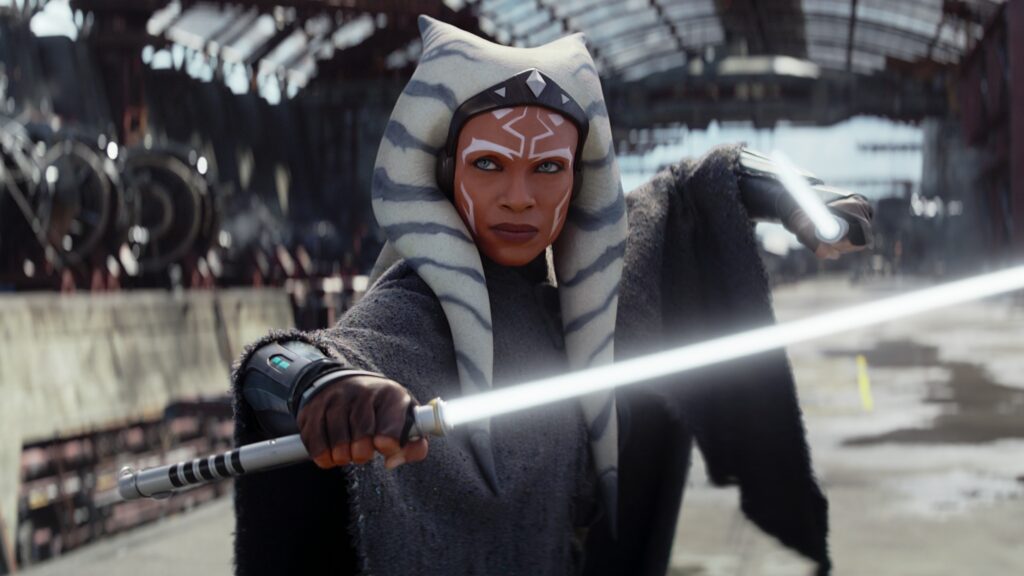
The fallout from this decision triggered a domino effect, with Kennedy increasingly tasked not with shaping the future of Star Wars, but with containing its crises. The Last Jedi dampened fan enthusiasm, an effect that carried directly into Solo: A Star Wars Story’s lacklustre commercial response. Its underperformance prompted Lucasfilm to quietly shelve its planned slate of standalone spin-off films. Meanwhile, the lack of a unified vision for the sequel trilogy culminated in The Rise of Skywalker, a film that feels less like a conclusion and more like a frantic attempt to appease every audience. With theatrical confidence shaken, Star Wars retreated to Disney Plus, where live-action series attempted to keep the franchise relevant. Results were mixed. The Mandalorian’s first two seasons and Andor stood out, but much of the rest felt uneven or overly cautious. Through it all, Kennedy bore the brunt of public scrutiny, often for decisions dictated by forces far beyond her control.
It’s tempting to frame Kennedy’s departure as either a victory or a loss, depending on one’s grievances with modern Star Wars. That framing, however, misses the larger point. A change in leadership alone will not fix a franchise whose problems are philosophical rather than personal. If Star Wars continues to be managed without long-term narrative foresight, if it remains willing to alienate significant portions of its audience for short-term returns, and if it keeps making creative promises to filmmakers only to undermine them with shifting mandates and rushed deadlines, the outcome will not meaningfully change. Without a coherent vision and the patience to commit to it, Star Wars risks collapsing inward, no longer a universe capable of growth, but a brand endlessly recycling its past, too afraid to imagine a future worth telling. The galaxy may still be far away, but the lessons of its mismanagement are close to home.