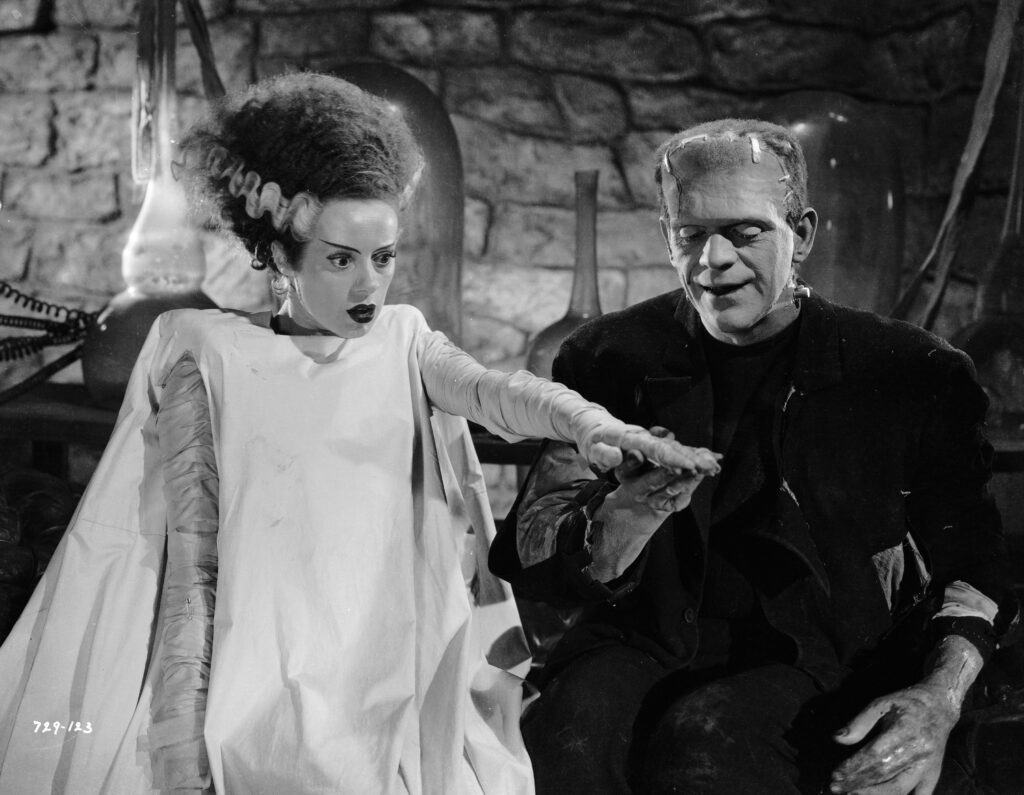
When Bride of Frankenstein was first released in 1935, it was met with both critical and commercial acclaim. In the decades since, its reputation has only grown, eventually earning recognition as one of the greatest sequels of all time and being selected by the Library of Congress for preservation in the National Film Registry. Despite the film’s title, the eponymous character appears only in its closing minutes, amounting to roughly five minutes of screen time. Even so, her brief appearance left a lasting impression, securing her place among the most iconic figures in the pantheon of movie monsters.
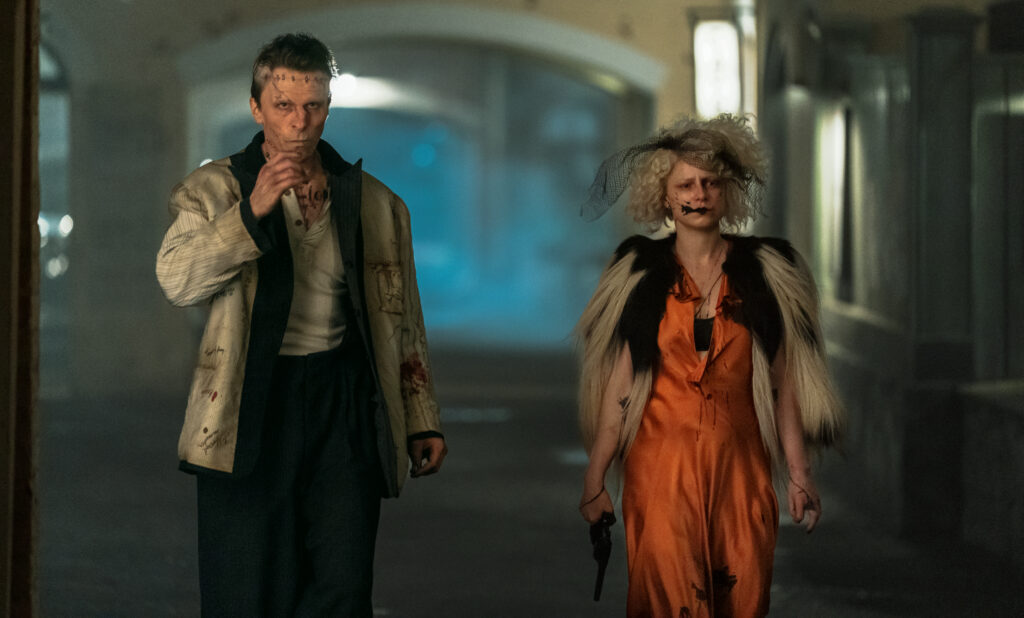
Close to a century later, an iconic figure like the Bride was bound to be reinterpreted one way or another. Monster icons such as Dracula, Frankenstein, and the Mummy have been revisited countless times in cinematic form, often with mixed results. Maggie Gyllenhaal’s The Bride! confronts the legacy of Mary Shelley’s work head-on, situating the film within a broader framework of gender inequality against the backdrop of 1930s Chicago.
If there’s a more overtly metatextual reading of The Bride!, it’s one the film actively encourages. Through frequent fourth-wall breaks and a heightened sense of self-awareness, Gyllenhaal frames the story not simply as a reinterpretation of a classic monster narrative, but as a commentary on the cultural conditions that produced it. The Bride exists within the mythology of Frankenstein, a male creation situated within a lineage of male-dominated storytelling. Yet the irony, which the film repeatedly foregrounds, is that this fictional lineage ultimately originates from Mary Shelley, a woman whose authorship has often been refracted through generations of reinterpretations.
From this perspective, The Bride! positions its central figure as a symbol of a deeper contradiction. The Bride’s original narrative purpose was never to exist as a fully realized character, but rather as an object of desire — constructed as a companion for Frankenstein’s monster. Gyllenhaal’s film attempts to dismantle this premise, interrogating the uncomfortable reality that the Bride’s identity has historically been defined through someone else’s need for her existence. It’s an admirable ambition, reflecting contemporary conversations about gender, authorship, and the uneasy inheritance of established intellectual property.
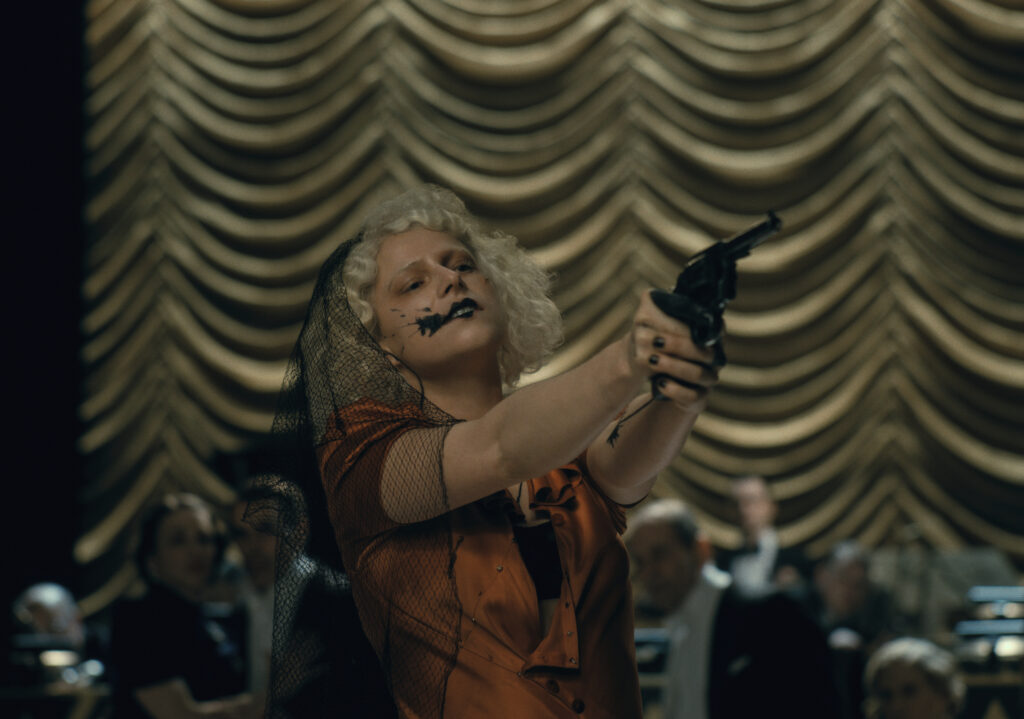
However, the film’s approach to resolving this tension proves less convincing. Leaning heavily into exaggerated stylistic choices — camp aesthetics, flamboyant performances, and a deliberately loud tonal register — The Bride! frames anarchy as a form of catharsis for its titular character. Chaos becomes the language of liberation, suggesting that the only way for the Bride to escape the narrative confines imposed upon her is to disrupt them entirely.
The problem is that this catharsis never fully materializes, either narratively or metatextually. Declaring independence from a mythos isn’t the same as escaping it. In practice, The Bride! remains deeply tethered to the very framework it claims to critique. The film insists that the character is breaking free from the chains of Frankenstein’s legacy, yet it continues to rely on that legacy for its thematic structure, visual identity, and narrative momentum.
In simpler terms, it isn’t enough for a character to proclaim that they’re unshackled from the chains of an established intellectual property, gendered or otherwise, only to remain dependent on that same mythology to justify their existence. The film itself seems aware of this contradiction, repeating its thematic message with increasing explicitness as the story unfolds. But repetition doesn’t necessarily lead to resolution.
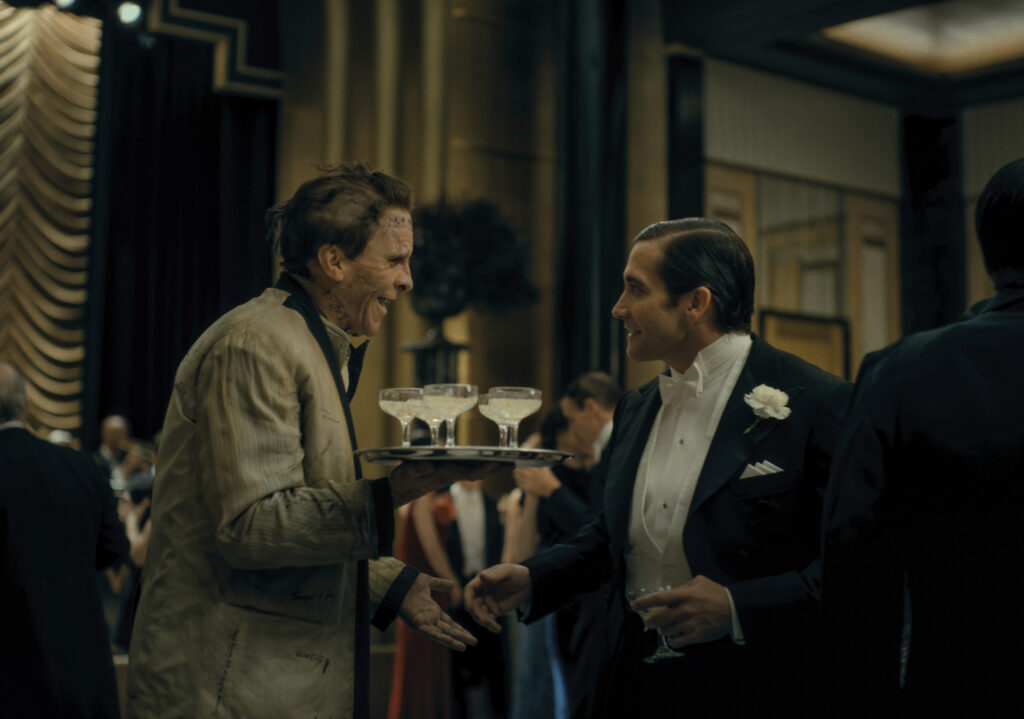
The irony extends beyond the film itself. While The Bride! repeatedly insists that its protagonist must break free from the narrative constraints of Frankenstein’s mythology, the film’s very existence remains firmly tethered to it. Posters, trailers, and promotional materials lean heavily on the recognizable iconography of the Bride, reminding audiences exactly which legacy they’re meant to recall. In this sense, the contradiction at the heart of the film isn’t merely thematic but industrial. The Bride may be searching for autonomy, but the machinery surrounding her continues to depend on the very mythology she’s trying to escape.
Nearly a century removed from the original, the Bride may speak, rage, and rebel, but all her defiance is filtered through the very mythology she’s meant to escape — leaving the film less a liberation story than a reminder that some legacies are inescapable.