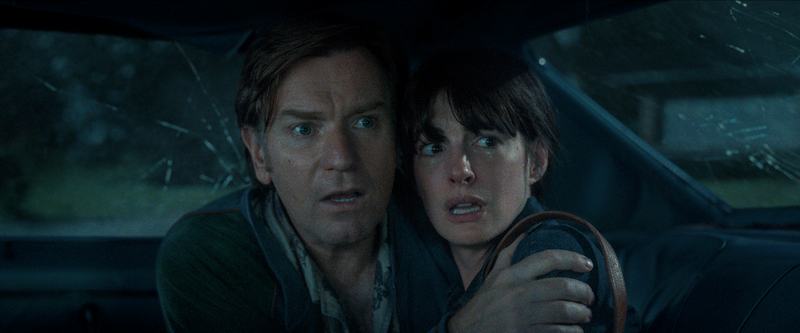
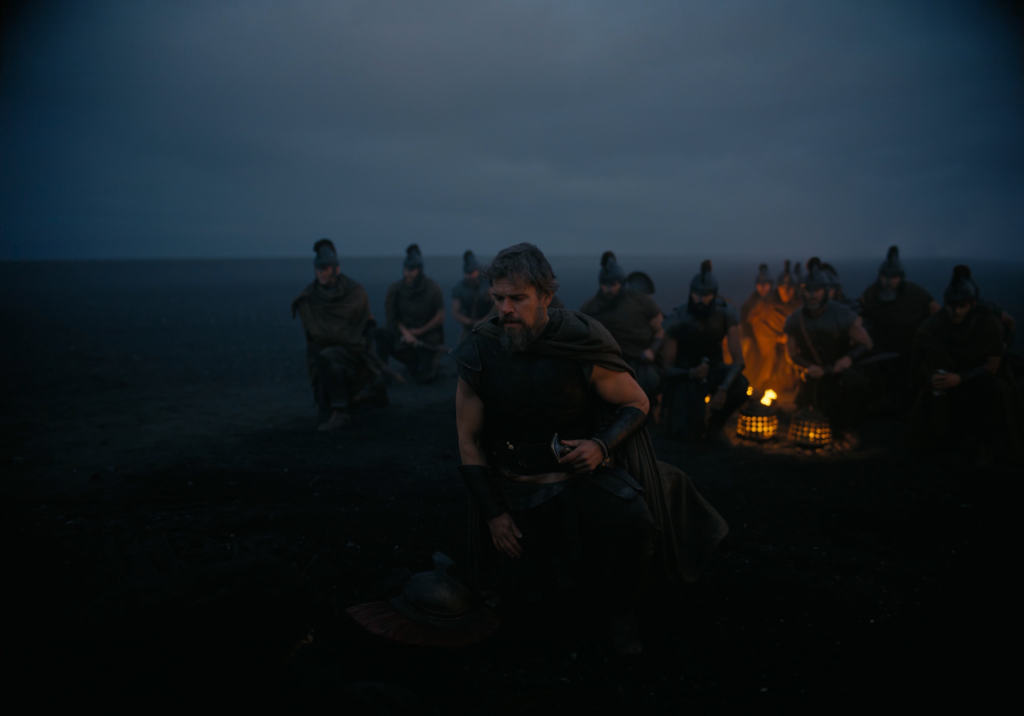
Shakespeare and Japan have long proven to be a surprisingly effective combination. Decades ago, Akira Kurosawa demonstrated this with Throne of Blood and Ran, reworking Macbeth and King Lear against the brutal landscapes of feudal Japan. Now, in the 2020s — an era where Japan’s global cinematic influence is largely driven by animation — that same creative fusion feels almost inevitable. Enter Scarlet, an anime reimagining that transports Shakespeare to a purgatory where time doesn’t follow the rules.
Shakespearean literature once again proves to be a rich well of inspiration when it comes to crafting a compelling protagonist. Scarlet’s (Mana Ashida) central motivation may not be entirely new, but it’s elevated by a powerful voice acting performance and striking animation that give the character emotional weight and immediacy. As a result, Scarlet is a protagonist who’s easy to root for, even when the narrative treads familiar ground. That visual excellence extends far beyond character design. From sweeping landscapes and richly detailed environments to imaginative creature designs, Scarlet’s animation works to deliver a consistently impressive visual experience.
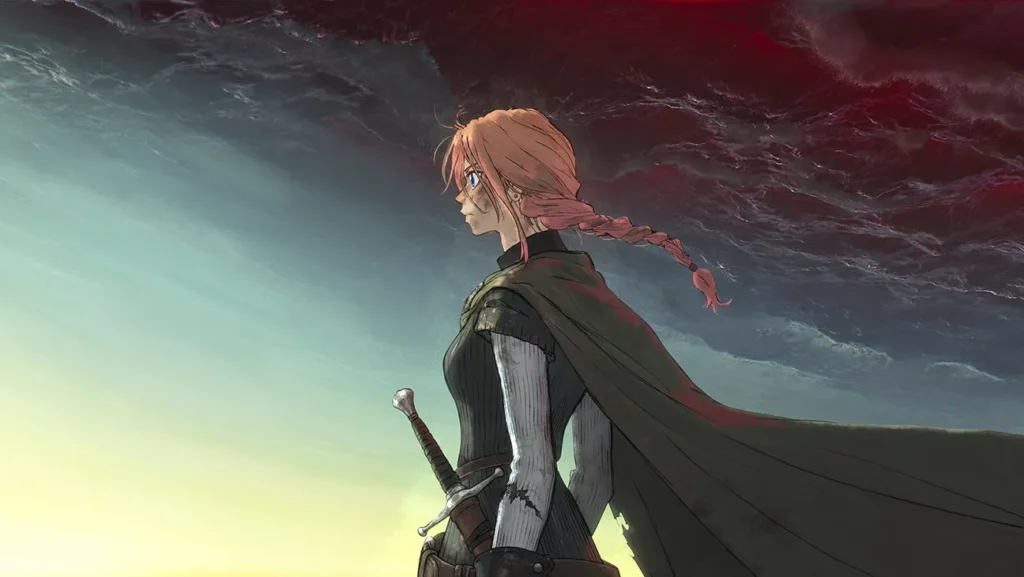
The parallels to Hamlet are unmistakable. Mamoru Hosoda’s Scarlet wastes no time in setting the stage, plunging the audience directly into the heart of its conflict before offering brief flashes of backstory to quickly bring us up to speed. This brisk, almost disorienting opening mirrors the emotional immediacy of its source material while trusting viewers to keep up.
Interestingly, much of Scarlet unfolds far from Hamlet’s traditional settings. Fully embracing its fantasy framework, the film bends time in ways that most Shakespearean adaptations can’t—or understandably choose not to. In doing so, Scarlet introduces an existential dimension that feels both thematically fitting and refreshingly uncommon within adaptations of Shakespeare’s work.
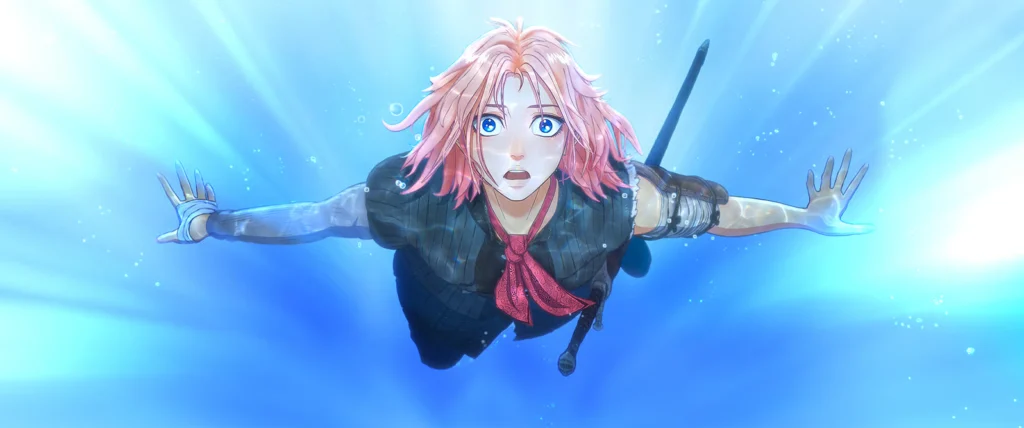
With revenge at the core of its narrative, Scarlet approaches the theme in a distinctly unconventional way. At times, the film feels as though it’s taking an almost reckless swing, embracing narrative risks that don’t always seem to pay off in the moment. Yet the end result is a story that ultimately lands, offering something genuinely meaningful to say about revenge, forgiveness, and the emotional cost of both. By the time the credits roll, Scarlet never feels derivative — an achievement in itself, given the sheer number of Shakespearean adaptations that have come before it.
In the end, Scarlet stands as a confident and thoughtful reimagining of Hamlet, one that understands the weight of its source material while never being constrained by it. Through striking animation, a compelling central performance, and a bold existential framework, the film finds new ways to explore familiar ideas of grief, revenge, and forgiveness. Its ambitious approach may at times induce a sense of whiplash for some viewers, but those same risks are largely what give Scarlet its identity. Rather than simply retelling Shakespeare’s tragedy, the film transforms it — proving that even centuries-old stories can still feel urgent, relevant, and alive when approached with imagination and care.