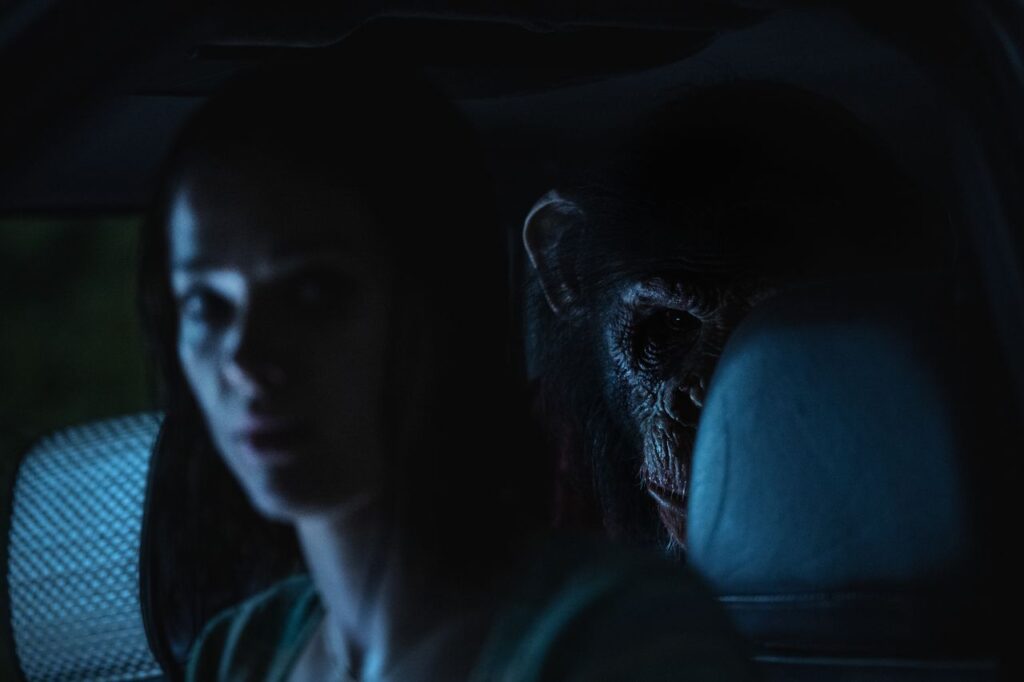
There’s something inherently unsettling about horror that grows out of the mundane, and Primate understands that instinctively. By taking an element of everyday life and twisting it into a tightly focused nightmare, the film grounds its terror in familiarity. That immediacy gives the premise real bite, allowing tension to build without leaning on heavy lore or excessive exposition. From the outset, Primate knows where its strengths lie and doesn’t waste time getting there.
The story follows Lucy (Johnny Sequoyah), who returns to her family’s remote, cliff-side home in Hawai‘i to reunite with her relatives and their adopted pet chimpanzee, Ben. What begins as an uneasy homecoming quickly turns into a fight for survival when Ben is bitten by a rabid animal. The once intelligent and gentle pet becomes something far more dangerous, violent, rabid, and hyper-intelligent, transforming the secluded home into a hunting ground. Primate presents nature, and disease in particular, as something genuinely frightening, treating rabies not as a narrative shortcut but as an uncontrollable force that demands respect.
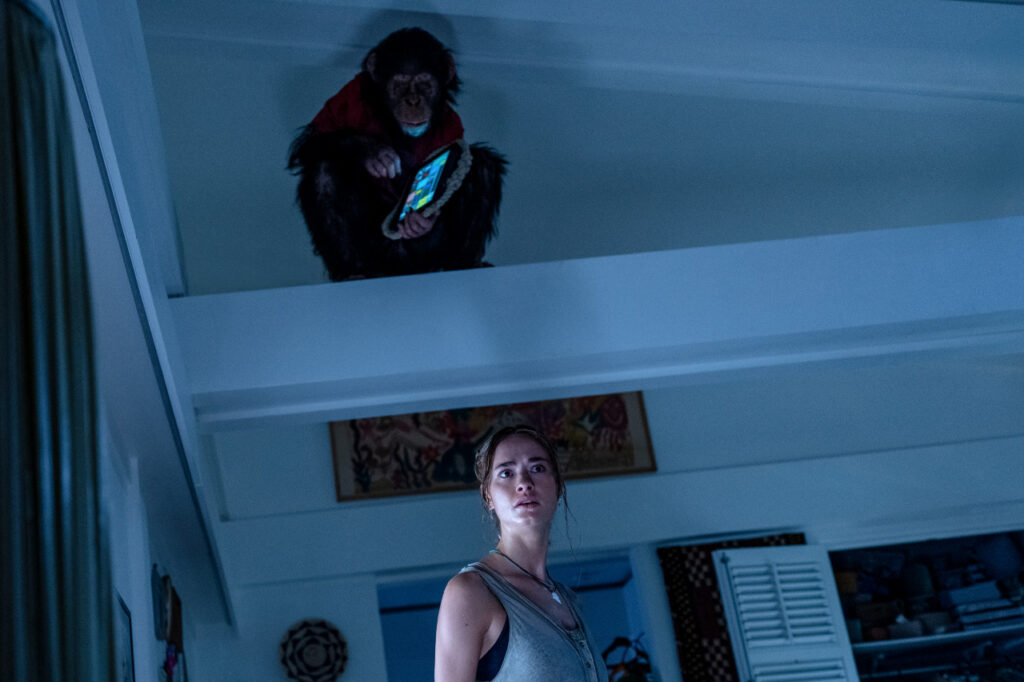
The film’s B-movie framework is unmistakable, but it adds to its charm rather than being a hindrance. Directed by Johannes Roberts, Primate leans into familiar genre tropes and recognisable beats, yet avoids inflating itself beyond what its premise can support. There’s discipline in how closely it sticks to its central idea. Instead of chasing scope or subtext, it keeps its focus tight and lets the threat do the work.
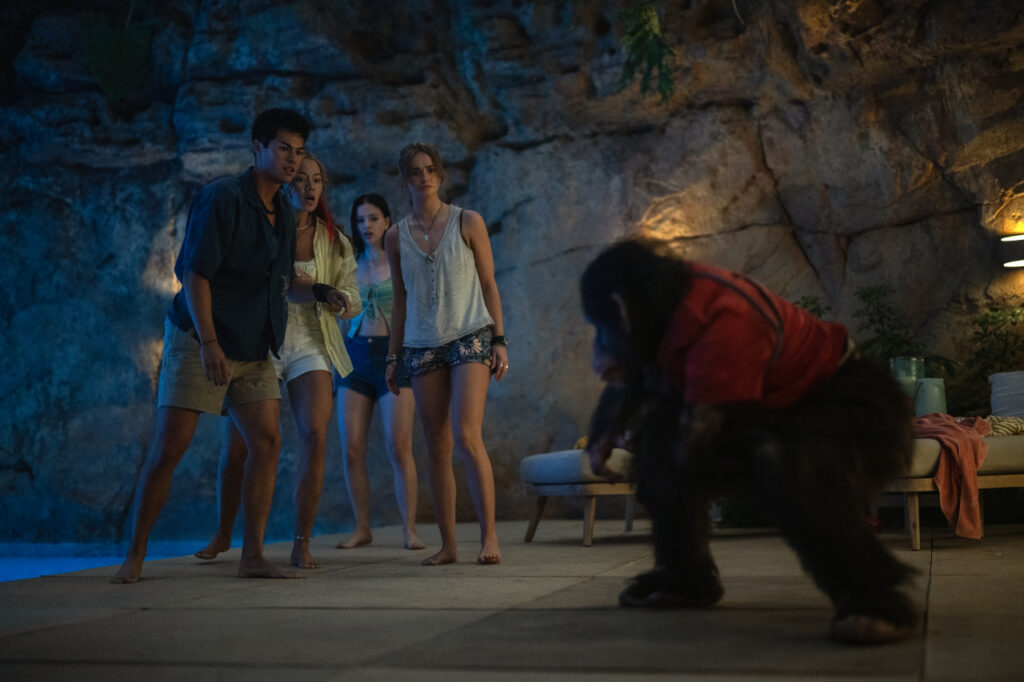
The film hits its stride early with a tense sequence staged in and around a pool, a genuinely effective showcase of suspense and staging, even if the rest of the film never quite reaches the same high. Where Primate consistently delivers is in its kills. The violence is frequent, bloody, and often gleefully nasty, boosted by a heavy reliance on practical effects. Ben’s physical presence is largely achieved without digital shortcuts, giving the carnage a weight and texture that feels increasingly rare in contemporary horror. Each kill lands with satisfying impact.
The pacing isn’t flawless. A late sequence centred on two characters arrives slightly too far into the runtime, briefly stalling momentum and making the film feel a touch longer than it is. Character depth is minimal and relatability isn’t a priority, but that trade-off works in the film’s favour. Primate isn’t chasing emotional complexity; it’s focused on tension, spectacle, and bloodshed.
It may not reinvent the genre, but Primate doesn’t need to. By maximising a straightforward premise, embracing practical effects, and knowing its own limits, the film proves that confident, well-executed horror doesn’t have to be bigger to be better.