It is hardly a stretch to suggest that most people are aware of the detrimental effects of prolonged social media use. In recent years, concerns about the relationship between social media and mental health have become a fixture of mainstream news coverage, alongside growing scrutiny of how these platforms can be weaponised to manipulate public opinion and interfere in political processes worldwide. Yet, despite mounting evidence of their potential harms, public reliance on social media has shown little sign of waning. If anything, our dependence on these platforms has continued to grow, raising questions about what keeps us coming back and who truly benefits from our engagement.
These concerns came into sharp focus in 2021, when Facebook whistleblower Frances Haugen exposed internal documents revealing how the company prioritised growth and engagement, often at the expense of users’ well-being. The revelations shed light not only on the pervasive influence of social media in our daily lives, but also on the opaque algorithms designed to keep us scrolling. It is this uneasy intersection of corporate greed, technological manipulation and social responsibility that forms the backdrop for The Social Reckoning, a film that seeks to revisit these questions and examine the human cost of a system built to capture our attention.
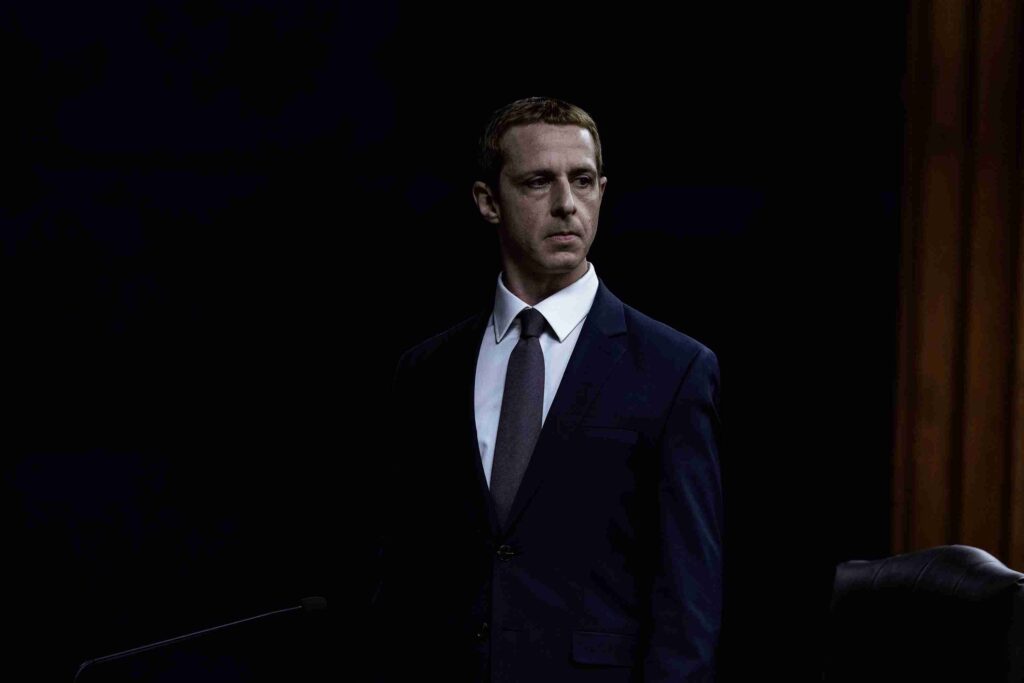
While The Social Reckoning may not be quite as effective as its predecessor, The Social Network, on several filmmaking fronts, there is nonetheless a story worth telling here. Unlike the first film, Mark Zuckerberg takes on more of a supporting role, with the narrative placing greater emphasis on the wider consequences of the platform he helped build. Both Aaron Sorkin, in his direction, and Jeremy Strong, to an extent, do a commendable job of portraying the tech mogul as someone largely indifferent to the impact social media can have, whether on individuals or society at large. The indifference is perhaps a consequence of the relentless pursuit of growth,where the human cost becomes an acceptable trade-off so long as the numbers continue to climb. If exponential growth is the ultimate goal, as it so often is under late-stage capitalism, then the show must go on, regardless of the damage left in its wake.
More interestingly, the film’s critique extends beyond Zuckerberg and Meta to the very society that has allowed these platforms to become so deeply entrenched in our lives. The problem is not simply that social media companies are willing to overlook the harm their products can cause, but that we, too, have become conditioned to accept it. Many of us understand the potential consequences of our online habits, yet remain either unwilling or unable to disengage completely. We continue to participate even when doing so contradicts our personal values, political beliefs or, perhaps most troublingly, our own well-being. There is something deeply paradoxical about recognising the mechanisms by which these platforms exploit our attention, only to return to them all the same. In this sense, the reckoning is not merely one that the tech industry must face, but one that society must confront with itself. After all, what good is exposing the machinery behind these platforms if we remain unwilling to step away from it?

Perhaps the most unsettling aspect of all this is how social media, or rather the mechanisms underpinning it, bears an unsettling resemblance to addiction. Like a drug, it offers an immediate hit of gratification, whether through likes, comments or the fleeting validation of being seen. Yet, beneath this instant gratification lies a potentially destructive cycle that many recognise but struggle, or simply refuse, to break away from. The longer we remain invested in these platforms, the more our sense of self-worth becomes entangled with the validation they provide, making it increasingly difficult to disengage without feeling as though we are giving up a part of ourselves. It is a sight that has become all too familiar: families gathered around a dinner table, supposedly spending time together, only for each member to be absorbed by the screen in front of them. The irony is difficult to ignore. Tools designed to connect us have, in many instances, become the very things that keep us apart.
What makes this all the more troubling is that such mechanisms do not discriminate. When human attention and the brain’s reward systems become commodities to be exploited, no one is entirely immune, regardless of their background, beliefs or identity. The platforms are designed to keep us engaged, and the more time and personal information we surrender, the more valuable we become to the very systems that profit from our continued presence. There is an old adage that captures this rather succinctly: if you are not paying for the product, you are the product. Perhaps the greatest tragedy is that we have become so accustomed to this arrangement that recognising the exploitation is no longer enough to make us walk away. And therein lies the real reckoning: not simply in exposing the harm these platforms can inflict, but in confronting just how much of ourselves we have already surrendered to them.