In an era where many franchise films are eager to reinvent themselves as darker and more serious affairs, Masters of the Universe stands out by embracing the very qualities that made the property memorable in the first place. Brimming with campy fun, colourful world-building and a delightfully theatrical villain, the film delivers an entertaining spectacle that frequently recalls the fantasy and science-fiction adventures of the 1980s. Despite suffering from an unnecessarily bloated runtime and a few tonal missteps, it remains a charming and often hilarious adaptation.
The film gets off to an impressively strong start with a prologue that efficiently establishes the mythology of Eternia while introducing audiences to Prince Adam (Nicholas Galitzine). Rather than burdening viewers with excessive exposition, the opening strikes a careful balance between world-building and character development, providing newcomers with enough context to invest in the story while satisfying long-time fans of the franchise. It immediately conveys the sense of scale and adventure that defines the film, laying a solid foundation for the journey that follows.
A major contributor to the film’s appeal is Daniel Pemberton’s exhilarating score, which injects energy and grandeur into nearly every scene. The music does much of the heavy lifting when it comes to elevating the film’s fantasy spectacle, but it reaches its peak with “Eternia”, a standout track featuring Brian May‘s unmistakable guitar work. The collaboration feels particularly fitting given the film’s evident affection for Flash Gordon, the cult science-fiction classic famously associated with Queen. Much like that film, Masters of the Universe embraces its larger-than-life sensibilities with complete sincerity, creating a colourful and unabashedly theatrical adventure that feels refreshingly old-fashioned in the best possible way.
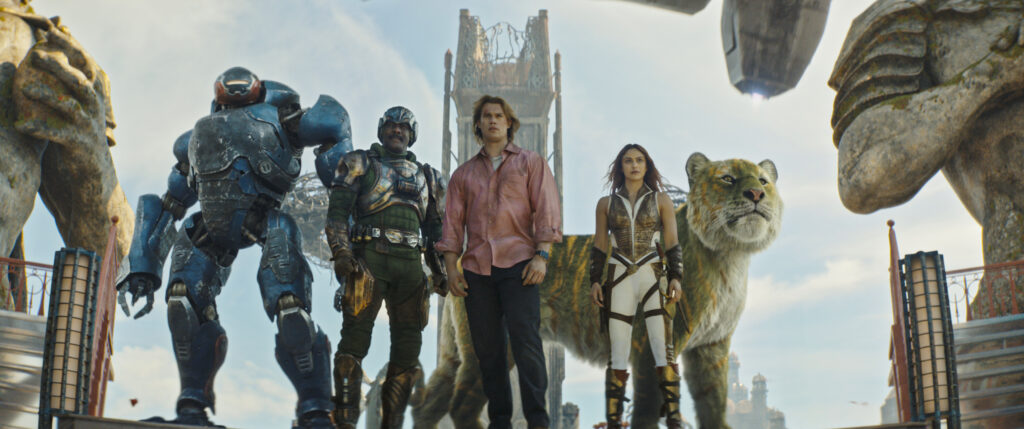
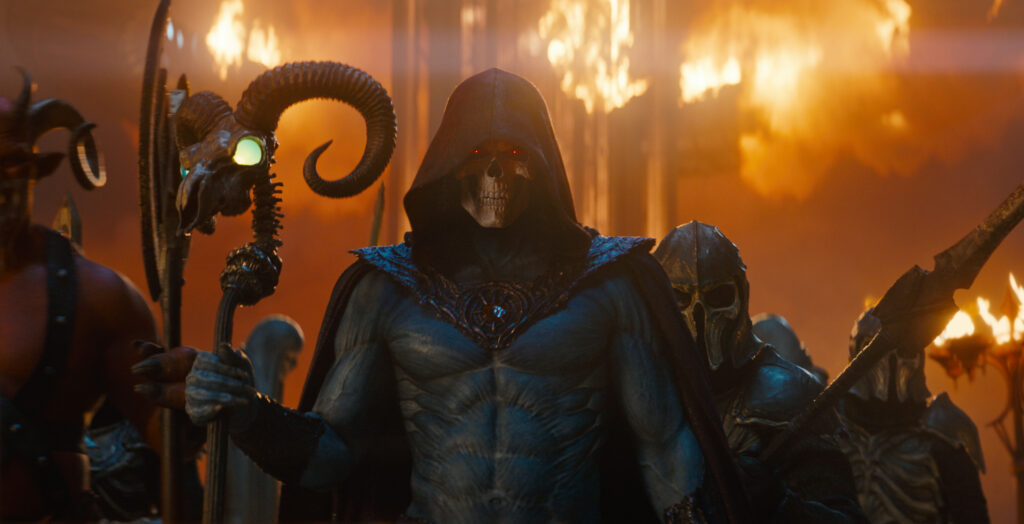
The cast is uniformly solid, with each performer understanding the heightened tone required of the material. However, it is Jared Leto’s Skeletor who emerges as the film’s undisputed highlight. Leto strikes an effective balance between menace and absurdity, delivering a performance that fully embraces the character’s iconic theatricality without descending into parody. His screen presence is apparent, which is doubly ironic given that the actor has been practically absent from the movie’s promotional campaign. Regardless, the actor delivers a performance that understands exactly what kind of film this is and benefits enormously from that self-awareness.
For all its strengths, however, Masters of the Universe is not without its shortcomings. Given the relative simplicity of its central narrative, the film feels surprisingly bloated in both runtime and structure. Certain subplots and detours add little to the overall experience, creating the impression of a screenplay burdened by too many competing ideas. The pacing consequently suffers, particularly in the middle act.
The film’s comedic instincts are similarly uneven. While much of the humour lands effectively and complements the film’s campy tone, there are moments where the jokes feel excessive or misplaced. On occasion, the desire to generate another laugh undermines scenes that would have benefited from a greater sense of dramatic or emotional sincerity. The visual effects are also somewhat inconsistent. At their best, they help bring Eternia vividly to life; at their worst, some sequences resemble the polished cinematics of a modern video game rather than a major studio production.
Nevertheless, Masters of the Universe succeeds where it matters most: it is entertaining. By wholeheartedly embracing the colourful absurdity of its source material rather than apologising for it, the film delivers a fantasy adventure filled with charm, humour and spectacle. It may not possess the narrative discipline to become a true classic, but as a crowd-pleasing celebration of a beloved franchise, it proves that sometimes a little cheese can go a long way.